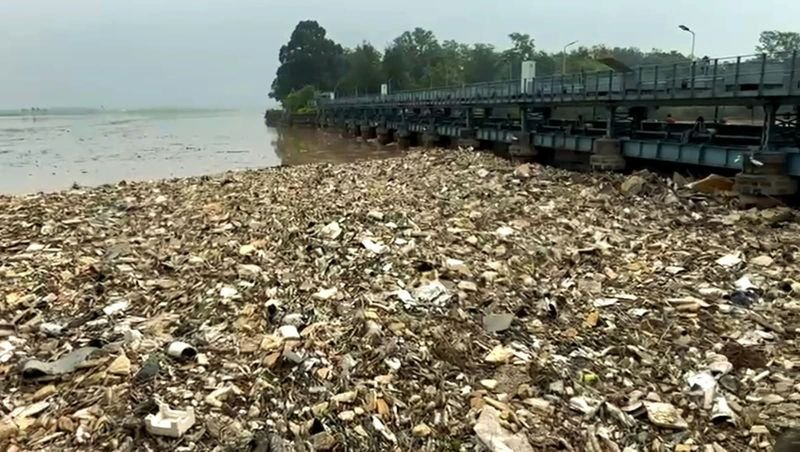

The working of the Punjab Pollution Control Board (PPCB) has come under scrutiny over its alleged failure to monitor chemical, pharmaceutical and heavy metal contamination in the Sirsa and Sutlej rivers, allegedly caused by industrial activity in Himachal Pradesh’s Baddi-Barotiwala-Nalagarh (BBN) industrial belt.Despite several scientific studies reporting the presence of pharmaceutical compounds, toxic heavy metals and industrial pollutants in the Sirsa River, the PPCB has not been testing river water for these contaminants. The issue has now been raised by Ropar AAP MLA Dinesh Chadha, who has written to the PPCB Chairman seeking action.Related News: ‘Toxic’ Sutlej: Punjab AAP MLA lodges FIR against Himachal factories in Baddi, Nalagarh over alarming pollutionIn the letter, a copy of which is available with The Tribune, Chadha termed the situation unfortunate and alleged that PPCB authorities were not checking the waters of the Sirsa and Sutlej rivers for chemical, pharmaceutical and heavy metal contamination.The Sirsa, a major tributary of the Sutlej, flows through Himachal Pradesh’s industrial heartland before entering Punjab and merging with the Sutlej near Tallewal in Ropar district. Environmental researchers have repeatedly identified industrial activity in the BBN region as a major source of pollution entering the river.A 2024 study titled Ecological and Human Health Risk Assessment of Pharmaceutical Compounds in the Sirsa River of Indian Himalayas, authored by Arohi Dixit, Himanshu Pandey, Renu Lata and others, documented pharmaceutical contamination in the river. The study identified compounds including ciprofloxacin, norfloxacin, cetirizine and citalopram, with concentrations reported in the range of 50 to 150 micrograms per litre. The researchers warned that continuous exposure to such compounds could contribute to antimicrobial resistance and pose ecological risks.The study also found that contamination levels for several pharmaceutical compounds exceeded risk quotient thresholds for aquatic organisms, particularly algae, which form an important base of the river’s food chain.Another study by S.K. Bhardwaj, Reetika Sharma and R.K. Aggarwal examined metal contamination in the Sirsa and reported the presence of mercury, chromium, cadmium, lead and thallium. Such heavy metals are persistent pollutants that do not readily degrade and can accumulate in sediments and aquatic food chains. The findings pointed towards industrial sources, including chemical, metal-processing, dyeing and textile units.The latest controversy comes against the backdrop of government monitoring that has also shown severe pollution in the Sirsa. Earlier PPCB monitoring data for July 2025 to March 2026 showed substantial variation and elevated levels of several pollution indicators near Ghanauli, including extremely high total and faecal coliform counts.PPCB Chairman Vipin Kumar Jindal was not available for comment on the matter despite repeated phone calls and WhatsApp messages seeking his response.Meanwhile, pollution entering Punjab is not limited to dissolved contaminants. Sources said solid waste, including plastic bottles carried downstream by the Sirsa, had become a concern for irrigation authorities. A proposal was under consideration to install a floating barrier near the Ropar headworks to prevent plastic and other solid waste from entering the Sutlej and the canal network.With the Sirsa ultimately discharging into the Sutlej, environmentalists have stressed that contamination originating in the Himachal industrial belt was reaching every nook and corner of Punjab through the Sutlej and canal systems emerging from the river.