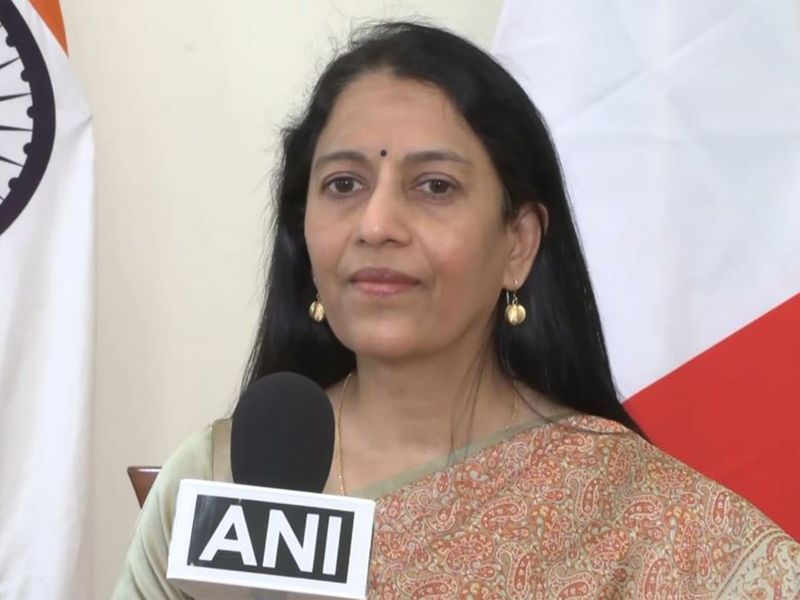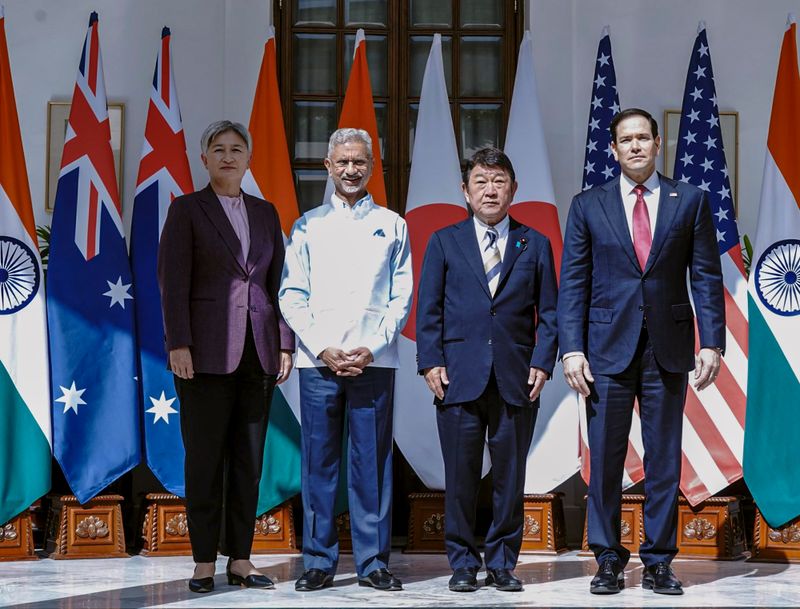

Seeking to counter perceptions of the Quad emerging as a military bloc, the Ministry of External Affairs on Tuesday said the grouping’s new Indo-Pacific maritime surveillance initiative was aimed at enhancing regional safety and maritime awareness rather than militarisation.The clarification came as the Quad unveiled an expansive maritime surveillance and digital connectivity agenda for the Indo-Pacific, signalling the grouping’s growing shift towards operational coordination in security, emerging technologies and critical infrastructure.A detailed factsheet released after the Quad Foreign Ministers’ Meeting here announced the launch of the first-ever Indo-Pacific Maritime Surveillance Collaboration (IPMSC), a mechanism designed to integrate maritime surveillance efforts of India, the US, Japan and Australia with an initial operational focus on the Indian Ocean Region.The initiative seeks to strengthen real-time information sharing, maritime domain awareness and coordinated monitoring of unlawful activities through expert exchanges and table-top exercises.Clarifying the nature of the initiative, Additional Secretary in the Ministry of External Affairs K Nagaraj Naidu said the IPMSC and the broader Indo-Pacific Partnership for Maritime Domain Awareness (IPMDA) should not be viewed as efforts to militarise the Quad.He said the objective was to help countries in the Indo-Pacific gain access to expensive maritime monitoring technologies and improve their ability to track unlawful activities at sea.Naidu pointed to the growing presence of “grey ships” and “dark ships” operating in international waters and said many regional countries lacked the technological capability to monitor such activities independently.According to the senior official, Quad partners were pooling commercially available technologies and sharing maritime data to assist friendly countries in addressing safety and security concerns. He said the new IPMSC initiative would build upon the existing IPMDA framework, under which the four countries were already working to create a comprehensive “Common Operating Picture” by integrating real-time maritime information across Indo-Pacific waters.“The focus is to provide partners an enhanced picture of the kind of vessels operating in the waters,” Naidu said during a special briefing. India’s Information Fusion Centre in Gurugram is expected to play a key operational role in the evolving regional surveillance architecture.The grouping also announced that India would host the next edition of the Quad-at-Sea Ship Observer Mission aimed at improving interoperability and operational coordination against unlawful maritime activities.Beyond maritime coordination, the Quad also pushed forward a broader technology and connectivity agenda focused on building trusted and resilient digital ecosystems in the Indo-Pacific.The four countries agreed to intensify collaboration on next-generation telecommunications technologies, including Open RAN and 6G standards, while also working towards interoperability in digital identity frameworks.The factsheet noted progress in the deployment of secure 4G and 5G Open RAN networks in Palau as part of efforts to provide alternatives to concentrated digital infrastructure systems in the region.The grouping also announced fresh support for undersea cable resilience and reaffirmed plans to ensure that all Pacific Island Forum countries are connected through undersea cable systems by 2026.In another significant initiative, the Quad announced more than $6 million in funding for six international artificial intelligence-based research projects focused on agriculture, including crop yields, pest management and food security.