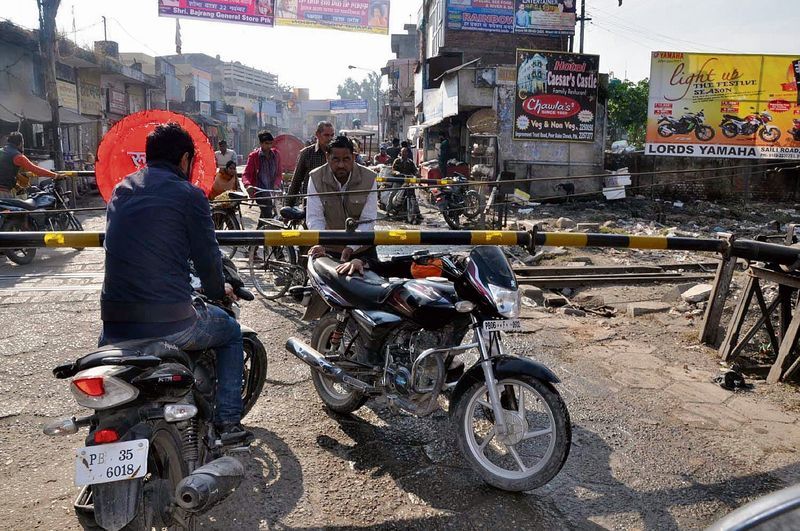

Railways have long been catalysts for urban development, driving economic growth by improving connectivity and reducing transportation costs. Across the country, rail networks have transformed once-isolated towns into thriving commercial centres.Pathankot is now poised to witness a similar transformation. With the Railways deciding to eliminate the long-standing bottleneck created by the railway level crossings—locally known as fataks—the city is expected to take a significant step towards improved mobility and economic revival.For decades, the 12 railway crossings within the municipal limits on the nearly century-old Pathankot-Joginder Nagar narrow-gauge line, popularly known as the Kangra valley railway, have hindered the city’s growth. The line was constructed between 1922 and 1929, with the Pathankot-Nagrota section commissioned on December 1, 1928, and the entire 164-km route becoming operational in 1929. Built by the British to connect key towns in present-day Himachal Pradesh with the rest of the country, it remains one of India’s longest narrow-gauge railway lines.The problem for residents has been persistent. Whenever the narrow-gauge train, popularly referred to as the “toy train”, passed through the city, all 12 level crossings were closed simultaneously. This effectively divided Pathankot into two halves several times a day, bringing traffic to a standstill for extended periods. With the train making more than a dozen trips daily, congestion became a routine feature of city life.The prolonged traffic disruptions also took an economic toll. Once known for its thriving economy built around the “three Ts”—Timber, Travel and Transport—Pathankot gradually lost its commercial edge. Frequent traffic bottlenecks disrupted business operations, while many industrial units relocated to neighbouring Himachal Pradesh and Jammu and Kashmir, attracted by better connectivity and tax incentives. Commercial activity declined, and the city lost much of its earlier vibrancy.The situation now appears set to change. Following the efforts of Union Minister of State for Railways Ravneet Singh Bittu, the Railway Ministry has decided to short-terminate the narrow-gauge train at Dalhousie Road railway station, located a few kilometres from Pathankot on the Joginder Nagar side. According to Bittu, the station will be redeveloped at a cost of Rs 21.42 crore. Officials said the issue of rake washing has also been resolved and a technical team is finalising the operational details.Several public representatives had attempted to resolve the issue over the decades. Former Gurdaspur MP Vinod Khanna repeatedly raised the matter with successive Railway Ministers, while former MPs Partap Singh Bajwa and Jattvibeil Jakhar also pursued the proposal. Although technical teams visited the city on multiple occasions, the project remained stalled because of bureaucratic and technical hurdles. Former Pathankot MLA Amit Vij also explored possible solutions through his contacts in New Delhi, but the issue remained unresolved.As traffic volumes increased sharply from the early 1980s, aided by rising vehicle ownership and easier access to automobile loans, congestion worsened. Property prices in several parts of the city stagnated as buyers became reluctant to invest in areas frequently affected by traffic jams. Ambulances, fire engines, school buses and commercial vehicles often struggled to move across the city whenever the level crossings were closed.Residents now hope the long-pending decision will finally remove one of Pathankot’s biggest infrastructural constraints. Once implemented, the project is expected to ease traffic congestion, improve urban mobility, revive commercial activity and give the city a fresh impetus for growth. After decades of waiting, Pathankot may finally be able to shed the burden of its 12 railway crossings and move towards a more efficient and prosperous future.