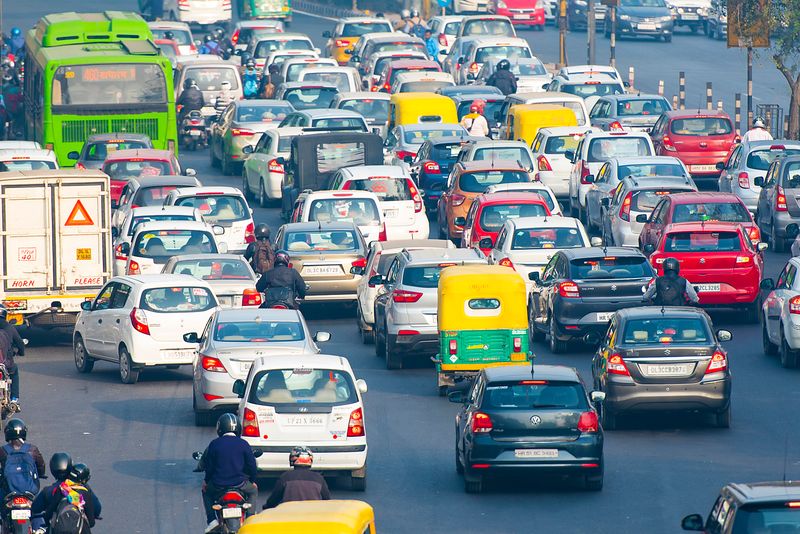

As record-breaking heat waves sweep across Europe, reports of roads softening, deforming and buckling have raised a question: why do roads in India, where summer temperatures routinely cross 45°C, continue to hold up while some European roads begin to fail at temperatures around 30°C?The answer, experts say, lies not in the weather alone but in how roads are engineered.According to Ambika Behl, Senior Principal Scientist at the Central Road Research Institute (CRRI), the difference stems from climate-specific engineering, material selection and pavement design standards.”European countries have historically designed their pavements to withstand prolonged freezing temperatures, snow, frost action and repeated freeze-thaw cycles. Their pavement structures and materials were optimised for extreme cold climates. With climate change bringing unprecedented heat waves, some of these roads are now being exposed to temperatures beyond their original design envelope,” Behl said.India, on the other hand, has long built its roads to withstand intense summer heat and heavy traffic.Indian pavements are designed keeping in mind:Surface temperatures that frequently exceed 65-70°C.Heavy axle loads and high traffic volumes.Diverse climatic conditions, from scorching deserts to regions with intense rain.Specially selected bitumen grades and polymer-modified binders that offer superior high-temperature performance and resist softening.These climate-adapted engineering practices allow Indian roads to remain stable even during prolonged heat waves, highlighting the importance of designing infrastructure for local environmental conditions.As global temperatures continue to rise, experts say countries may increasingly need to revisit long-standing engineering standards to adapt infrastructure to a changing climate.The recent events serve as a reminder that climate change is redefining infrastructure design across the world. Design assumptions that held true for decades are being challenged by more frequent and intense weather extremes.According to Behl, it’s time that pavement engineers, must now move beyond designing for historical climate data. The future demands:* Climate-resilient pavement designs.* Advanced polymer- and bio-based modified binders.* Performance-based specifications that account for evolving climatic conditions.* Sustainable materials that enhance durability while reducing environmental impact.”At CSIR-CRRI, our research is focused on developing next-generation, sustainable pavement technologies capable of performing under increasingly challenging environmental conditions while supporting India’s rapidly expanding infrastructure,” the scientist said.Infrastructure resilience is not built after a crisis. It is engineered long before the first layer of asphalt is laid.Meanwhile, the UN Economic Commission for Europe (UNECE) said, “The current heat episode in Western Europe has highlighted climate risks and the consequences of transport”. Adding that “Extreme weather events are no longer a future risk but a reality today, adaption of transport infrastructure is an imperative”.Several countries in Europe including France, Germany and Portugal have undertaken national mitigation strategies.