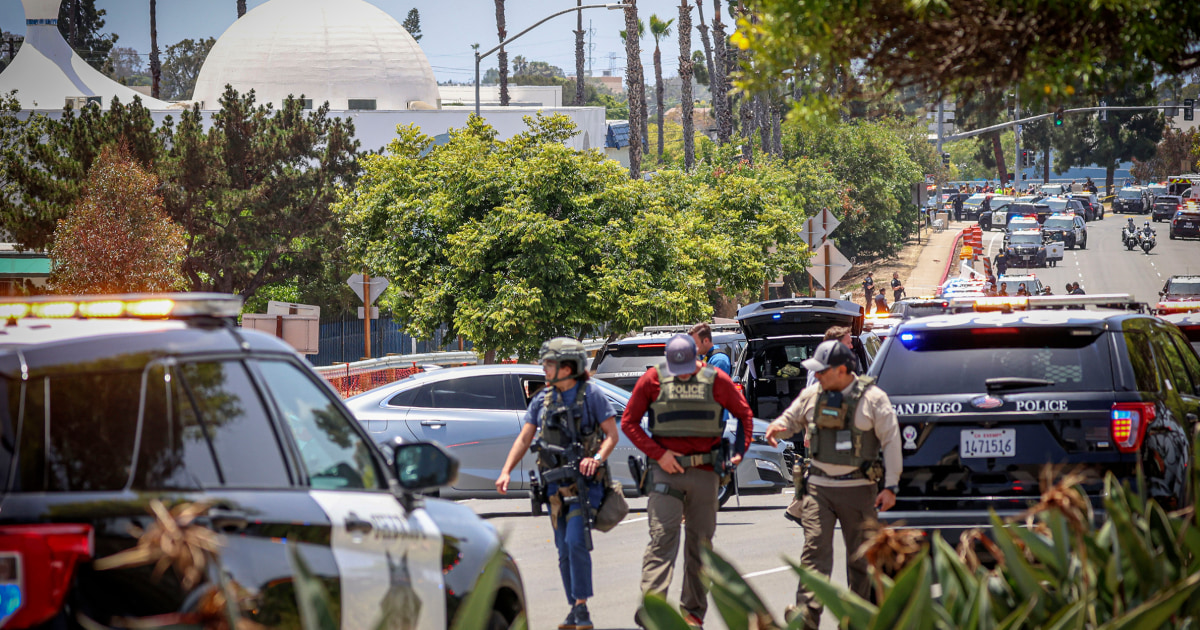

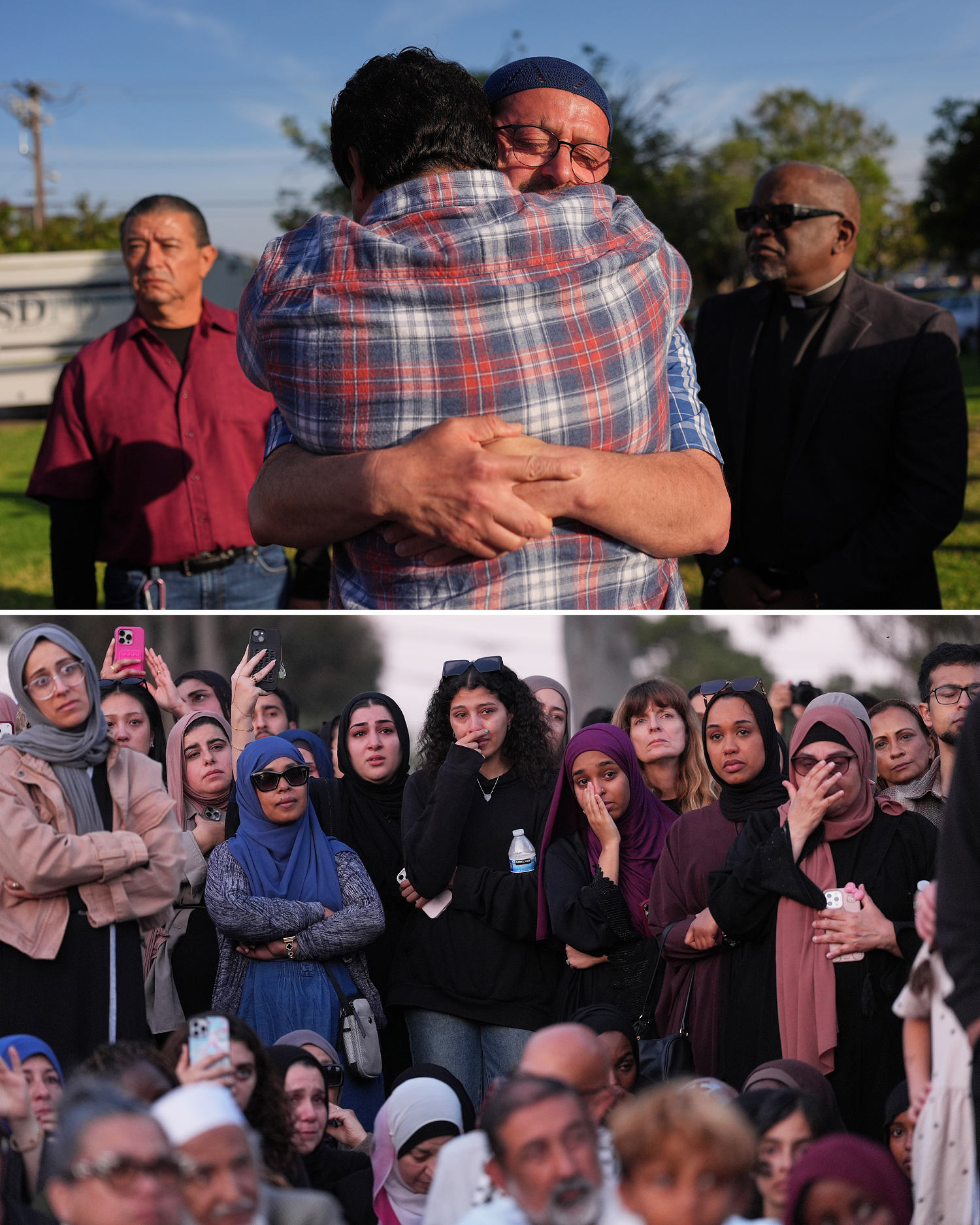
The two teenage suspects in this week’s deadly attack on a San Diego mosque appear to have written a 75-page document replete with neo-Nazi ideology, incel rage and racist meme culture drawn from the darkest corners of the internet.Subscribe to read this story ad-free Get unlimited access to ad-free articles and exclusive content.In an echo of the 2019 massacre at mosques in Christchurch, New Zealand, the suspects appeared to have worn body cameras that livestreamed their assault, video of which has circulated online.The suspects — identified by authorities as Caleb Vazquez and Cain Clark, teenagers who are believed to have first met online — killed three people at the Islamic Center of San Diego before taking their own lives on Monday. Authorities looking into the motivation behind the shooting are working to authenticate the lengthy typewritten document, which is filled with vitriol about Muslims, Jewish people, Black people, Latino people, the LGBTQ community, women and various other identity groups. The document features Nazi iconography and explicit references to accelerationism, a white supremacist ideology that encourages acts of violence to hasten the creation of a white “ethnostate.”“They didn’t discriminate on who they hated,” FBI special agent in charge Mark Remer told reporters at a news conference Tuesday. “It covered a wide aspect of races and religions.”A body is covered with a tarp at the scene of a shooting outside the Islamic Center of San Diego on Monday.Gregory Bull / APThe writings also “illustrate general misanthropy and an immersion in online nihilistic violent extremist ecosystems,” according to a review conducted by the Anti-Defamation League’s Center on Extremism, which tracks online and offline activity.The suspects’ purported writings shed light on the harrowing realities of violent extremism in the early 21st century, a time marked in part by an increase in high-profile, ideologically driven shootings and magnified by the chaotic nature of the modern internet. In the years since a gunman massacred worshippers at two mosques in Christchurch, New Zealand — a livestreamed attack that transformed extremist violence into editable digital content— experts say the internet has lowered the barrier for radicalization.“What I’m seeing here is a messy combination of ideological impulses, with accelerationist language that expresses a desire to be a heroic martyr that can inspire the actions of others but also clear white supremacist and antisemitic ideas alongside deeply misogynist and incel references,” said Cynthia Miller-Idriss, an American University professor who studies domestic extremism. “It’s messy and blurry and characteristic of the kind of young man who spends far too much time online incubating in hateful spaces and then follows a choose-your-own-adventure path to assembling what seems to him a coherent rationale for violence as a preferable solution to what he positions as an urgent or existential threat,” Miller-Idriss added.