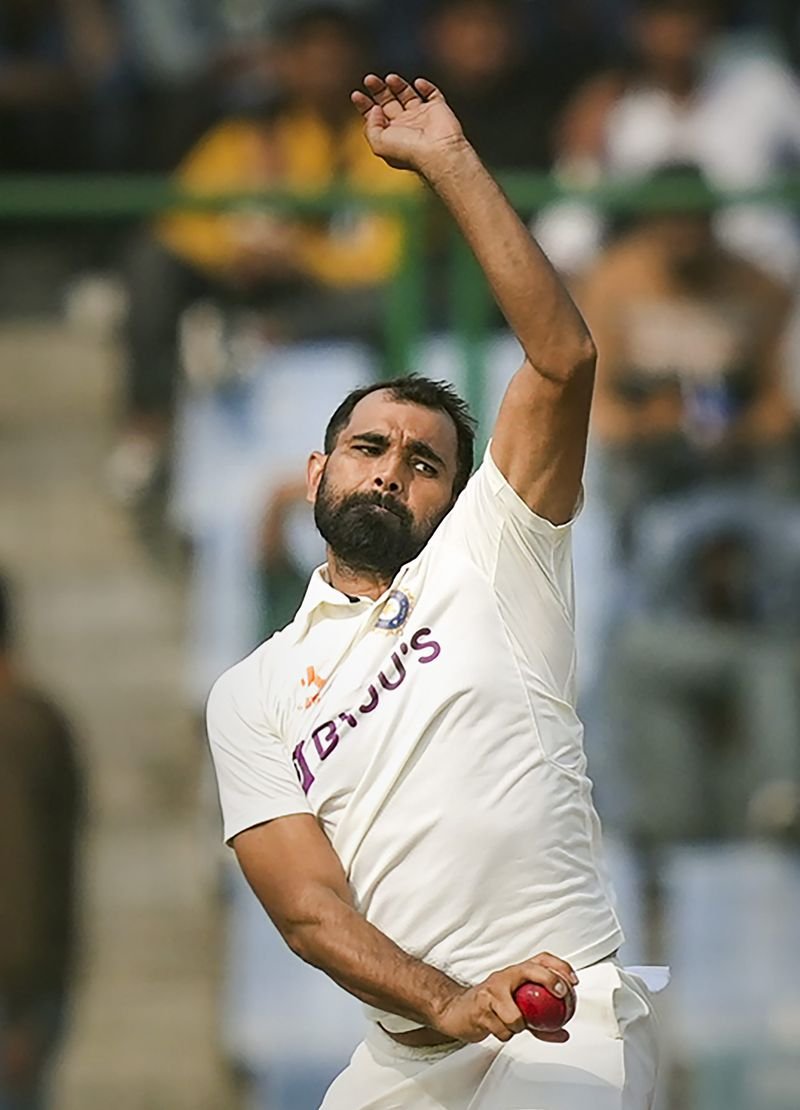

Race, religion, caste are central to an identity that survives as much on social validation as it does on institutional support. In this amphitheatre of struggling masses and competing, conflicting ideologies and ideas, where society seems at war with itself, sport and in specific Indian context cricket is supposed to be a metaphor for fair play, justice and social mobility that transcends identity.The word identity takes me back almost three decades, to images of an emerging explosive talent that took India by storm in the early Nineties. Its brightness did not illuminate the skies for long; instead, it burnt itself in the fire of its own ambition and a sense of victimhood.The dusky, audacious figure of Vinod Kambli confronts me in all his grace and elegance, with an expansive persona willing to push the conservative boundaries of societal hierarchies.It is hard to say whether it was his lower caste origins or his alleged “disciplinary” problems that riled the establishment and led to his being “eased” out of the Indian team. Should we think like Shakespeare’s Cassius, who says, “The fault, dear Brutus, is not in our stars but in ourselves, that we are underlings?”Or do we believe the issue is complex and the collective guilt of having allowed Kambli to self-destruct is a burden we have not confronted with the sensitivity, responsibility and seriousness that a mature society should have.In Kambli’s journey and of many like him, we can see the cruel face of destiny that decides the fate of individuals born into circumstances not of their own making. They are victims of societal vanity and a dogmatic belief that the present life is a consequence of past acts, where our future is written in stone. When hierarchies, rewards and punishments are ordered in heaven, our lives on earth are like lottery numbers that favour a select few.In this unequal distribution of nature’s bounties, if Kambli bears the burden of history’s complexities, someone like Mohammed Shami should consider himself fortunate to have had a Test career that will be remembered for his exquisite skills of swing and seam bowling. Yet the manner of his exit, with scant regard for his impressive record and without being given another chance, raises troubling questions.George Orwell’s novel ‘Animal Farm’, a searing, sarcastic examination of totalitarianism, contains a line that has never aged or lost its relevance: “All animals are equal, but some animals are more equal than others.” It may not be unreasonable to suggest that this could well apply to selections to the Indian team, the omission of Sarfaraz Khan and now Mohammed Siraj being the best examples of how whimsical these can be.Shami’s journey begins in a nondescript village of Uttar Pradesh and two failed trials for selection in the state team. He is guided to explore his luck in the bursting-at-the-seams metropolis of Kolkata, an unlikely and unusual route to success. In the “maidans” of the city and its club structure, Shami finds his moorings and soon enough is talked about as a bowler of immense potential.The boy from rural UP, a cauldron of caste and communal politics, is adopted by Bengal and goes on to find his paradise at the Eden Gardens. The qualities that made Shami the poster boy of seam position and swing bowling are all on display in his record nine-wicket haul in his debut Test against the West Indies.Many successes come his way, yet a combination of physical breakdowns and inexplicable omissions ensure that his place in the team is never secure. His Muslim origins, never an issue until then, make an ugly appearance when a section of hate mongers question his loyalty to the team after India lose a World Cup T20 match in 2021 to Pakistan.An identity, that had always been Indian, was suddenly called into question by stoking this communal fire. It was doused by the then Indian captain, Virat Kohli, who came out strongly in Shami’s defence, describing his detractors as spineless and saying that this is the most “pathetic thing that a human being can do”.While praising the passion with which Shami plays for the country, Kohli made a far more significant statement that needs to be preserved and promoted in these times where some people wear bigotry as a badge of national honour: “All those who have attacked him can come with more force if they want to, our brotherhood, our friendship within the team, nothing can be shaken.”In the eyes of most cricket experts, Shami was a special talent who exercised iron control over his line and length, had lion-hearted courage and exemplary motivation. He worked hard to recover from heart-breaking ankle and knee injuries to make comebacks.His last Test was the 2023 World Test championship final in England before an ankle injury forced him out of the team. He worked hard on his rehabilitation, and tried his best in the last couple of years to prove, through his performances in domestic tournaments, that he is fit and ready for an India recall, which never came.In an interview last year, Shami rued the fact that no one from the cricketing establishment had got in touch and sought to know from him his fitness status and whether he was ready to play for the country again.Frustrated, he announced his retirement from Test cricket in the first week of November. As lavish praise was being heaped on him, with most surprised at his not being given another chance, I was reminded of my favourite Shakespeare lines: “As flies to wanton boys are we to the gods: They kill us for their sport.”— The writer is the author of ‘Not Quite Cricket’ and ‘Not Just Cricket’