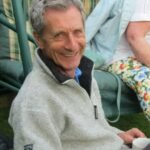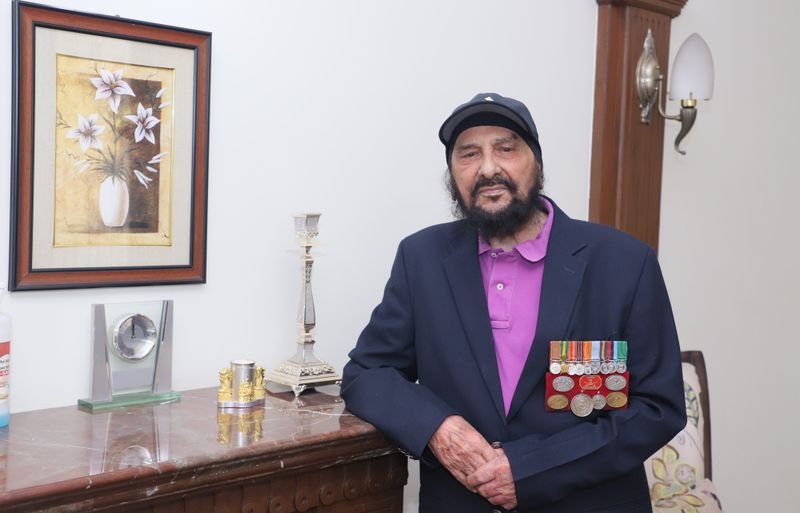

Lt Col Manmohan Singh (retd) was 15 when he and his father boarded a refugee train from Lyallpur, Pakistan, bound for Amritsar. The former Deputy Director of Sainik Welfare, Jalandhar, still heaves a sigh of relief when he recalls how fortunate they were.“After reaching our paternal uncle’s home in Hoshiarpur, we were reunited with my mother and five younger siblings, who had arrived here earlier. We learnt that ours was the last train to reach Amritsar safely. The holocaust began just a day later,” he recalled.The 94-year-old Army veteran said his family had initially been reluctant to leave Pakistan because they owned milch cattle in Gojra tehsil. “We had sent the other members of the family across the border, but my father, who was a schoolteacher, decided to stay back for a few days because of the cattle. But as the situation worsened, we had no option but to leave,” he said.Recalling his childhood in Pakistan, Lt Col Manmohan Singh said his father, Santokh Singh, was a strict disciplinarian when it came to studies. “My father was a teacher and was very particular about our studies. Once, I scored 49 out of 50 in science and proudly showed him my result. Instead of praising me, he scolded me for losing a mark,” he recalled.Singh learnt Persian during his early years at school in Pakistan and developed a lasting love for languages. His interest eventually led him to pursue an MA in Urdu from Jamia Millia Islamia.A major setback came in 1948 when his father passed away. As the eldest child, Singh took on the responsibility of ensuring that his younger siblings received a good education. “My mother was an early riser. She would wake us all at 4 am for self-study before we went to school,” he said.Singh studied at Khalsa High School in Garhdiwala and later pursued a BSc at DAV College, Jalandhar, under a freeship programme that selected only 11 students. He went on to complete an MSc in Physics from SCD Government College, Ludhiana. Noted poet Sahir Ludhianvi was about a year and a half senior to him, he recalled.Singh later cleared the IFS examination and served in the Forest Department for four years before joining the Army. A fighter by temperament and fiercely independent, Lt Col Manmohan Singh chose not to marry because of his responsibilities towards his family.“I had three younger sisters and two brothers to take care of, so I decided not to marry,” he said. His younger brother, Saroop Singh Dhatt, served as an IPS officer in Maharashtra. One of his sisters earned an MSc in Political Science and became an assistant professor in the US.Singh also found a sense of fatherhood in raising his nephew. “I brought my nephew from the village when he was young, adopted him and mentored him,” he said. His nephew, Lt Gen Ranbir Singh (retd), went on to serve as Director General of Military Operations and gained prominence for planning the Uri surgical strikes.Singh also looks back with pride on his long tenure as Deputy Director of Sainik Welfare. Even after completing his official tenure, he continued to serve, drawing a token salary of just Re 1 a month.For more than 20 years, he played a key role in organising cultural and patriotic programmes for district-level Independence Day and Republic Day celebrations. “I used to train children rigorously for three weeks. I was so particular about the parade of our NCC cadets that they began winning awards for the best parade, even outperforming the police and paramilitary contingents,” he said.During his tenure, more than 3,000 young people also underwent pre-recruitment training at the Sainik Welfare office. At 94, Lt Col Manmohan Singh’s story remains one of resilience, sacrifice and service — a life shaped by the trauma of the Partition, devotion to family, a passion for education and an enduring commitment to the nation.