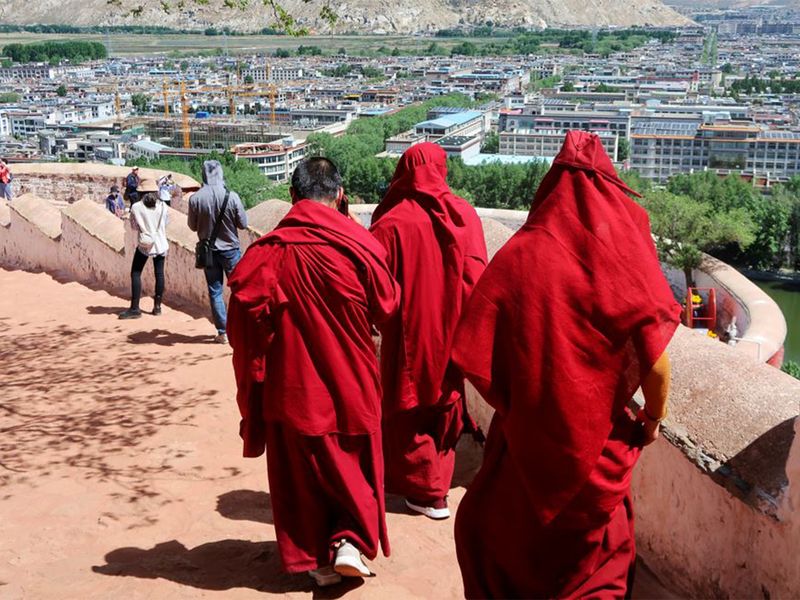

Beijing [China] April 28 (ANI): The United States State Department’s Bureau of East Asian and Pacific Affairs, in its latest annual report to Congress under the Reciprocal Access to Tibet Act of 2018, has stated that Tibet Autonomous Region (TAR) remains the only territory in the People’s Republic of China (PRC) where foreign visitors, including diplomats, journalists, researchers, and tourists, face extraordinary access restrictions requiring special permits in addition to Chinese visas, according to Tibetan Review (TR).As cited by TR, the report said these restrictions are even harsher for overseas Tibetans, particularly Tibetan Americans, who undergo stricter scrutiny when seeking to visit their homeland. The Reciprocal Access to Tibet Act mandates reciprocal restrictions on Chinese officials involved in denying access to Tibet and allows sanctions against those responsible.TR reported that throughout 2025, Chinese government regulations and longstanding policies continued to obstruct travel to both the TAR and Tibetan areas outside it for US diplomats, officials, journalists, and tourists. International visitors were still required to obtain TAR government permits before entering the region, while Chinese security forces reportedly subjected foreign visitors in Tibetan areas outside the TAR to surveillance, harassment, and intimidation.The TAR remains the only area in China where foreigners, including diplomats, must formally request permission to visit. In 2025, US Embassy consular officials in Beijing were allowed their first official visit to the TAR since 2019. The five-day visit included meetings with TAR officials, tour operators, hospitals, and cultural sites, but the report emphasised that one visit does not amount to full restoration of access.Beijing’s travel regulations for Tibet remain unique among China’s provincial-level entities. Since 1989, foreign travellers have required official confirmation letters, usually arranged through government-approved travel agencies that mandate designated guides. Access is frequently denied during politically sensitive periods, such as the anniversary of the 1959 Tibetan Uprising and the Dalai Lama’s birthday.The report, as highlighted by TR, stated that US citizens of Tibetan heritage face even more severe screening, often requiring United Front Work Department approval, embassy interviews, and extensive personal documentation. Even after permits are granted, Tibetan Americans reportedly face interrogations, surveillance, and pressure to install monitoring applications on their phones.Journalists and human rights monitors remain among the most restricted groups. TR cited the Foreign Correspondents’ Club of China (FCCC) as saying Chinese authorities rejected nearly all requests by US journalists to report from the TAR, while 93 per cent of correspondents attempting to report from Tibetan regions faced major obstacles. Even in Tibetan areas outside the TAR, journalists reportedly encountered surveillance, physical obstruction, and intimidation.The report concluded that despite limited consular improvements, China’s restrictions on Tibet continue to obstruct transparency, independent reporting, and genuine international engagement with the region. (ANI)(This content is sourced from a syndicated feed and is published as received. The Tribune assumes no responsibility or liability for its accuracy, completeness, or content.)