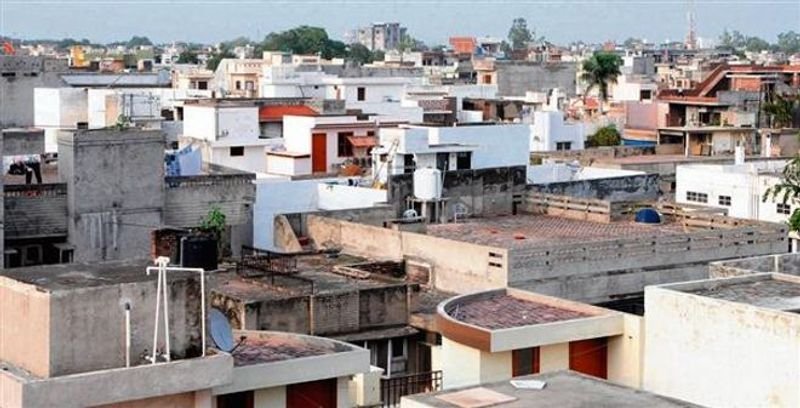

To curb unauthorised colonies and promote planned residential areas, Haryana has notified a town planning scheme for plotted housing in municipal towns exempt from controlled area provisions.The scheme is applicable to 66 municipal councils and municipal committees falling in the state’s low-potential urban development zone. This includes Bhiwani, Fatehabad, Jind, Kaithal, Sirsa, Jhajjar, Narnaul, Hansi, Charkhi Dadri, Nuh, Gohana, Samalkha, Ambala Sadar and several other smaller towns.Urban development in the state is governed by the Haryana Scheduled Roads and Controlled Areas Restriction of Unregulated Development Act, 1963, the Haryana Municipal Act, 1973, and the Haryana Municipal Corporation Act, 1994.Under these legislative frameworks, the Town and Country Planning Department/Urban Local Bodies Department declares controlled areas and publishes development plans that serve as statutory instruments for regulating land use, guiding spatial growth and planning infrastructure within controlled areas.However, in municipalities that are at the initial stage of urban development, there is no need to declare a controlled area to avoid undue restrictions. In the absence of a town planning scheme for residential plotted housing within municipal towns, housing requirements are met only through unauthorised colonies.“To address the challenges of unauthorised colonisation, there was a pressing need for a comprehensive and responsive policy framework,” said the Commissioner and Secretary, Urban Local Bodies Department, Ashok Kumar Meena. He added that the new scheme would help the poor.The scheme was approved by the Haryana Cabinet on July 28 and notified on July 30. Under the scheme, developers will be allowed to undertake plotted housing projects on a minimum area of five acres, with no maximum area limit. The site must be approachable from an existing minimum 33-foot-wide road.The minimum area of a plot can be 50 square metre while the upper limit is 250 square metre. Furthermore, of the total residential plots, the developer must allocate at least 50 per cent for plots with a maximum area of 150 square metre.The maximum area allowed under residential and commercial plots is 65 per cent of the scheme area, with the commercial use capped at 5 per cent.No separate EWS category plots shall be provided.The area for organised open space shall not exceed 7.5 per cent of the scheme area and shall be provided in a single, regularly shaped pocket.Furthermore, public utility sites are prohibited within the green zone. The ground coverage, FAR, basement, height and parking will be as per the Haryana Building Code, 2017, as amended from time to time.The minimum width of internal roads under the scheme must be 10 metre. Registration of independent floors on a plot is allowed.The developer has to make arrangements for internal services such as metalling of roads, paving of footpaths, plantation, street lighting, water supply, sewers and drains, and necessary provision for their treatment and disposal.The developer must transfer 5 per cent of the scheme area free of cost to the municipality concerned for the provision of community facilities. Alternatively, the developer will have an option to develop such area on its own or through a third party, subject to the condition that the cost shall not be “levied on the residents of the scheme”.The developer has to make mandatory provision within the site for the segregation of solid waste. An area of not less than 50 square metre must be earmarked and suitably designed for segregation, storage and handling of solid waste.The developer must register the project with Haryana Real Estate Regulation Authority. No sale, advertising or booking is allowed prior to such registration.“All such projects shall be completed within five years from the date of grant of permission,” said the notification. However, an extension of two years is allowed on a payment equivalent to the licence renewal fee.Developers will also remain responsible for maintaining roads, parks and public utilities for five years after completion before handing them over to the local authority free of cost.