

A TV producer who was left permanently disabled after paramedics ‘pressed the wrong button’ on a defibrillator has received a payout from the NHS.
Meg Fozzard, then 26, collapsed at her home in Walworth in April 2019, after suffering a cardiac arrest caused by an underlying heart condition.
Sign up for the Health newsletter
Thank you!
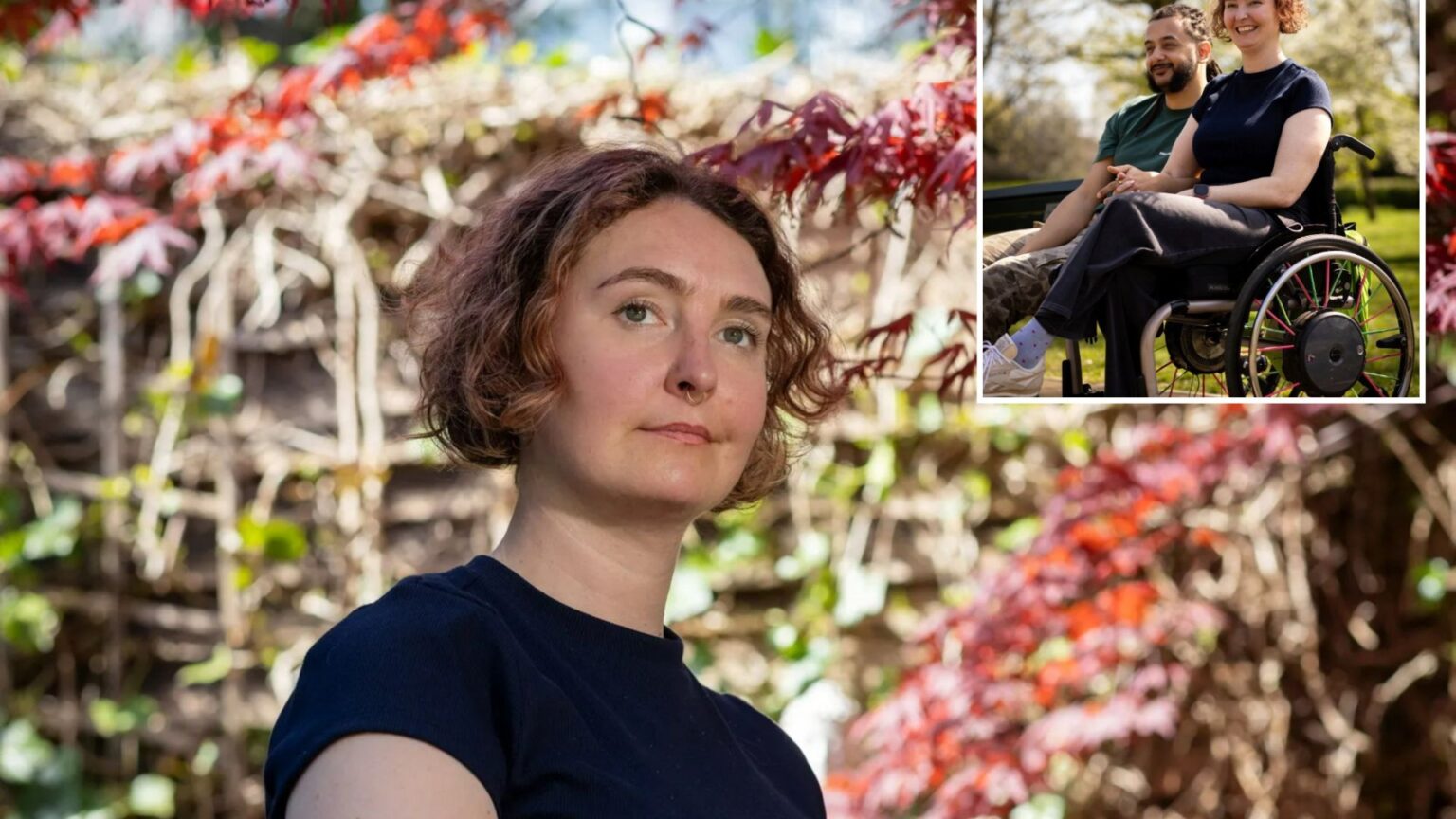
Her partner, Xander Font Freide, was terried to find Meg gasping and unresponsive at their home in Walworth Credit: SWNS
Meg Fozzard was left permanently disabled after paramedics failed to operate the defibrillator properly during a cardiac arrest Credit: SWNS
Her terrified partner Xander Font Freide frantically dialled 999 and was told to administer CPR at once.
But when the ambulance crew arrived at the scene – after bungling attempts to find her flat – they didn’t believe she was in cardiac arrest, despite warnings from the emergency handler.
When paramedics failed to secure the equipment correctly – using monitoring leads instead of defibrillator pads – the device didn’t alert them that a shock was urgently needed.
The team then failed to trigger the device’s emergency mode, delaying the shock by a further four minutes.
STOLEN YOUTH
My GP prescribed painkillers for tummy pain – then came a heroin addiction
STOLEN YOUTH
My GP prescribed painkillers for tummy pain – then came a heroin addiction
Meg has been left with delayed speech, fatigue and requires the use of a wheelchair Credit: SWNS
Her payout from the NHS has allowed her to finance physiotherapy and speech and language therapy Credit: SWNS
Meg’s brain was starved of oxygen for eight minutes as a result and she now struggles with speech, fatigue, and requires a wheelchair.
She also experiences brain fog, reduced dexterity and involuntary limb spasms.
She has received undisclosed compensation from the London Ambulance Service, which has admitted breaches in its duty of care.
“It’s almost impossible to find the words to describe the physical and emotional impact of trying to come to terms with what happened,” said Meg, now 33.
“At first I had no idea but as the severity of my brain injury became more apparent the realisation started to sink in.
“That moment of being in hospital and realising my life was never going to be the same was tough, I really struggled with that.
“Before my injury, I’d hop on a train or even fly across the world and visit friends but that all changed.
“I’d gone from being independent to being reliant on others. I even struggled to tell people what I needed because of my speech.”
Meg was unable to work for 14 months as a result of the incident.
But as a result of the payout, she has been able to access speech and language therapy, physiotherapy and occupational therapy.
Despite the ordeal, she can now stand for up to an hour, her speech and cognitive functions have begun to improve, and she has returned to work as a part-time freelance producer.
Meg added: “I do aerial sports now, I’m learning to swim again.
“It’s been amazing because I thought these were things I’d never be able to do again.
“However, I’ll always be upset at the care I received when I was in desperate need so it’s vital action is taking to improve patient safety for others.”
Recalling the moment he found Meg struggling to breathe, Xander, 32, said: “I was sat at my computer and I heard Megan making a strange gasping, croaky noise, then her complexion started changing rapidly.
The charity coordinator said after seeing her grow “extremely pale”, he knew something was “terribly wrong” and potentially life-threatening.
He added that Meg seemed “confused and chaotic” when ambulance crew arrived.
“When Meg got to hospital she was under very heavy sedation and I was told that they were keeping Meg cool and keeping an eye on brain swelling from the trauma,” he said.
“It was an incredibly difficult time for everyone and we were desperately hoping Meg would pull through.
“I continue to be amazed by Meg and the bravery and determination she has shown to start reclaiming her life.”
Leena Savjani, the specialist medical negligence lawyer at Irwin Mitchell representing Meg, said: “The last few years and coming to terms with the life-changing repercussions of Meg’s cardiac arrest have been incredibly difficult for her and her loved ones.
“While Meg has made tremendous progress in her recovery through access to rehab, she still faces many challenges.
“Nothing can make up for what she’s been through but this settlement allows Meg to focus on her future and importantly means she will have access to specialist life-time support she requires to make the best recovery possible.
She added that it was vital lessons are learnt from the tragic accident to ensure future patients’ lives are not put at risk.
“Every second counts when trying to resuscitate someone suffering a cardiac arrest.”
Chief Medical Officer Dr Fenella Wrigley said: “On behalf of London Ambulance Service, I sincerely apologise that the care provided to Ms Fozzard that day in 2019 did not meet the standard we expect.
“In the weeks following this 999 call, we conducted a thorough review to learn the lessons that led to Ms Fozzard’s defibrillation being delayed. The learnings from the review were all implemented at the time and our ways of working have been changed.”