
From the administrative records of the Khalsa Darbar to rare chronicles detailing legacy of Maharaja Ranjit Singh, Punjab’s is emerging from thousands of fragile manuscripts scattered across archives, libraries and private collections.
Under the aegis of the Gyan Bharatam Mission (GBM)—a flagship national initiative by the Union Ministry of Culture aimed at discovering, preserving, and digitising India’s manuscript heritage—a staggering 1,36,743 manuscripts have been identified across Punjab so far. The overarching goal is to build a comprehensive digital repository that safeguards the region’s historical footprint for global research scholars and history enthusiasts alike.
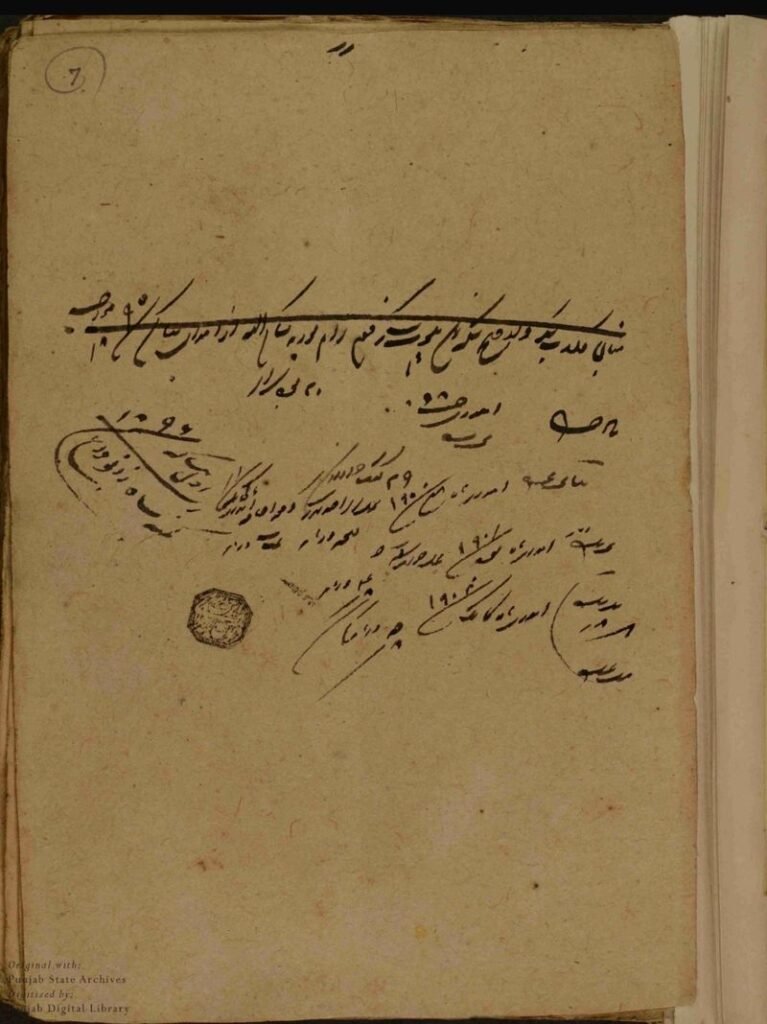
Of the verified manuscripts identified so far across 23 districts of Punjab, Patiala accounts for the highest number at 1,09,107, followed by SAS Nagar with 6,961 and Amritsar with 6,621. The idea behind the mission is to have a digital repository of manuscripts to further the cause of researching India’s heritage and history. Nearly 1,12,000 manuscripts available with the Punjab State Archives Department, have already been digitised by Panjab Digital Library. While around 7,000 records are being received from the Panjab Digital Library’s own collection and another 600 from the Sikh History Research Centre in Amritsar.
“As part of the mission, we are continuously inviting residents of Punjab to contribute, and this is an unending process. Several manuscripts are still available, and anyone who comes across such material is free to upload it. We have received documents related to PEPSU (Patiala and East Punjab States Union), records concerning the princely states of Punjab, and British-era files dating from 1850 to 1947, including documents related to the transfer of power to India,” says Sanjeev Kumar Tewari, Director, Punjab Archaeology, Cultural Affairs, and Archives Department.
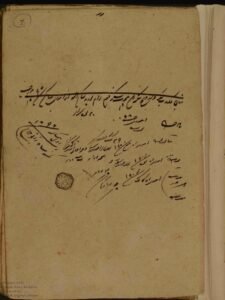
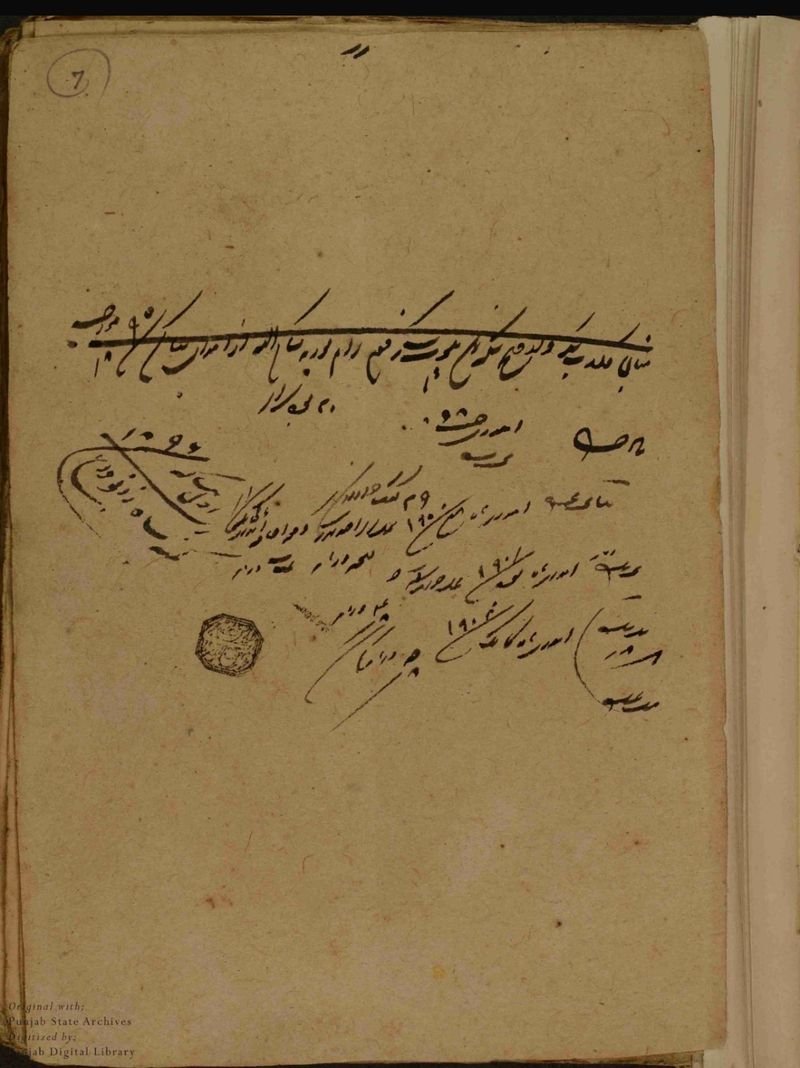
The GBM initiative has also brought to light manuscripts in Persian and other scripts, including the the documents in Shekasta Farsi. Punjab’s history and culture have long attracted the attention of scholars, including researchers from abroad. The region’s complex past shaped by successive political regimes, the Sikh period, colonial rule and the trauma of Partition has left behind a rich body of material documenting not just political and religious developments, but also agriculture, land ownership, irrigation, administration, trade and the everyday lives of its people.
Illustration of a manuscript depicting Ramayan in Gurumukhi script
Amit Singh Rana, an Amritsar -based conservator of archives and manuscripts – who found a mention in PM Narendra Modis ‘Mann Ki Baat’ programme in this year and , says there are several places in and around Amritsar like the Parshwanath Digambar Jain Temple, Baring Union Christian College, Guru Nanak Dev University’s central library, Khalsa College, the Departments of Languages and Sikh Religion, as well as Mool Nangal Gurdwara near the Amritsar airport, where the manuscripts could still be identified
Experts estimate that another 9,000–10,000 manuscripts could potentially be identified and made available for documentation and digitisation in the region.
Davinder Pal Singh, founder of the Panjab Digital Library, said the institution had started digitising historical documents in 2003 and described the Centre’s initiative as an important step towards preserving Punjab’s historical records.
“We have already been digitising manuscripts and other records of Panjab since 2003, at that time it was the only initiative in the country to preserve our heritage in digital format. The region lost a lot of its heritage to multiple partitions, starting from 1846, which continued till 1966, with the partition of 1947 as a decisive one, said Davinder.
Qissa of Siri and Farhad
Among the significant records identified are manuscripts dating back to the early 15th century, including Sharda manuscripts, a 1653 manuscript of the Guru Granth Sahib and documents related to the seventh Sikh Guru, Guru Har Rai. A manuscript of Guru Granth Sahib dated 1676 is also part of the collection.
Further elaborating, Singh talked about the importance of posters, they are another important source of historical material, particularly those dating to the period around Partition and the years preceding it. “Posters also played an important role during Partition and before it, and they are vital to the collection,” he said. PDL has digitized about 5000 posters so far. In all they have digitized over 100 million pages on Punjab.