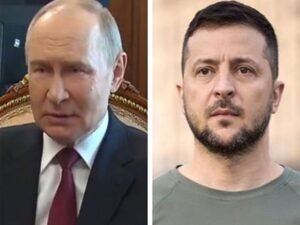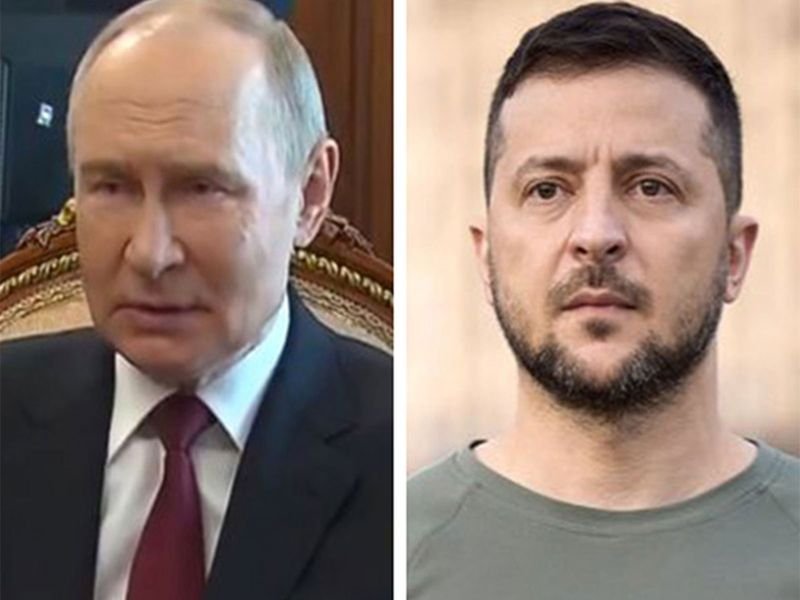

Washington DC [US], November 10 (ANI): The US says it sees a real chance of progress towards ending the war in Ukraine, as Russian, Ukrainian and American delegations prepare to meet in Abu Dhabi from Tuesday. But US officials cautioned that no deal will come quickly.In a briefing for journalists on Monday, held on condition that remarks be attributed only to US officials, they said the aim was to establish a more regular rhythm of negotiations. Contacts with Moscow and Kyiv have become daily, sometimes several times a day, since US envoys visited both capitals in September, they said.Talks had stalled earlier this year, the officials said, after a Ukrainian attack on a residence of Russian President Vladimir Putin and then the outbreak of the Iran war, which diverted American attention.The talks will be split into two main sessions. The first will cover how a ceasefire would be monitored, and what arrangements would stop either side using a pause in fighting to rearm. The officials described this as the central problem, because neither side will agree to stop if it believes the other is preparing for another round.The second session will take up territory, the most contentious issue. Publicly, the officials said, Russia still demands the whole of Donetsk region, while Ukraine wants the current front line to be the boundary. Privately, they claimed, both have shown some flexibility. They argued that Donetsk cannot be settled until the post-war security picture is clear, and that the two questions must be resolved together.Germany, France, the UK and Italy will take part in a separate session, alongside NATO, the EU and Ukraine. The US wants Russia to accept a wider, multilateral format, although officials acknowledged that Moscow distrusts European governments, which it blames for scuppering an earlier deal in Istanbul.Washington has asked Russia to accept security guarantees for Ukraine modelled on Nato’s Articles Four and Five, which cover consultations and collective defence. Whether the US would offer such a guarantee itself is for President Donald Trump to decide, the officials said, adding that he has been clear Europe should carry the financial burden.They also floated easing sanctions on Russia in stages, with the option of reimposing them if Moscow breaks an agreement. That question will be closely watched in India, one of the largest buyers of Russian oil, which has often been caught up in the politics of Western sanctions.On timing, the officials offered little. They said they would have wanted a deal six months ago, but described both sides as distrustful and angry, and pointed to other long negotiations as proof that complex agreements take years. Describing themselves as cautiously optimistic, they said they might travel to meet Putin and Ukrainian President Volodymyr Zelensky again, depending on how the next two days go.The talks follow last month’s localised truce around the Russian-occupied city of Oleshky in southern Ukraine. It was brokered with the help of US First Lady Melania Trump and allowed some residents to be evacuated and urgently needed humanitarian supplies to be delivered.Neither Moscow nor Kyiv has yet responded to the US account. The war, now in its fifth year, is the longest in Europe this century.Turning towards India and its efforts to bring this war to a halt, Zelenskyy on Monday said Prime Minister Narendra Modi had repeatedly conveyed that “now is the time to end the war, not to continue it” amid conflict with Russia, following their telephone conversation.In a post on X, Zelenskyy said, “I spoke with Prime Minister of India Narendra Modi @narendramodi and briefed him on the latest diplomatic developments. We are actively preparing on every item on the agenda for the meeting in Abu Dhabi. Ukraine has always taken a constructive approach, and Russia must show the same readiness to de-escalate.The Prime Minister has said more than once, including directly to the Russian leader, that now is the time to end the war, not to continue it.”Highlighting India’s potential role in diplomatic efforts, he added, “It is important that India identify what steps it can take and what dialogue it can pursue with other leaders to help bring the war to an end. Food security could be one such area,” he said.He also said the two leaders discussed Russia’s blocking of grain exports through the Black Sea and India’s possible role in establishing food corridors.”We discussed Russia’s blocking of grain exports via the Black Sea. India is ready to mediate in establishing food corridors, and we are counting on these efforts to continue,” Zelenskyy said.He further said Russia must understand the impact of blocked sea routes on the global economy and people worldwide.”Russia must understand that the global economy and hundreds of millions of people around the world are suffering because of blocked sea routes,” he said.Zelenskyy added that the two sides had agreed to maintain contact on bilateral issues. “We agreed that our teams will stay in touch on these and other bilateral issues,” he said.Following the telephonic call, PM Modi in a post on X said, “Glad to have had a productive telephone conversation with President Zelenskyy. We reviewed our wide-ranging bilateral cooperation and agreed to further strengthen India-Ukraine ties.””I thanked President Zelenskyy for sharing his perspectives on the ongoing conflict, its humanitarian aspects and various efforts to restore peace. Reiterated India’s firm commitment to contributing in every possible way towards a peaceful resolution,” he added.According to the Prime Minister’s Office (PMO) statement, the two leaders also discussed measures to further strengthen India-Ukraine bilateral cooperation in various sectors for the mutual benefit of the two peoples. (ANI)(This content is sourced from a syndicated feed and is published as received. The Tribune assumes no responsibility or liability for its accuracy, completeness, or content.)