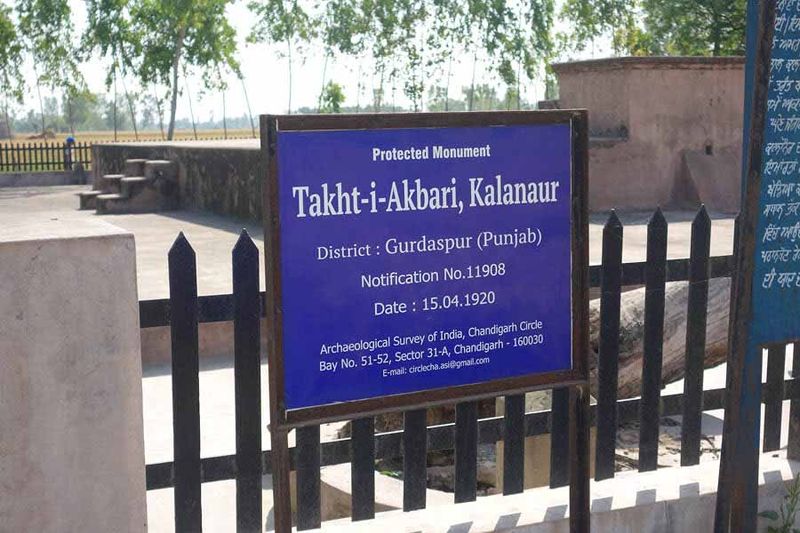

Located in Punjab’s Majha region, Gurdaspur district boasts a rich history shaped by ancient empires, Sikh Gurus, and the upheaval of the 1947 Partition.Founded in the 17th century by Mahant Guriyaji, the district holds considerable historical significance. It was at Kalanaur here, in 1556, that Mughal emperor Akbar was crowned, while Maharaja Ranjit Singh maintained a summer capital at Dinanagar.Today, the maharaja’s summer palace lies in ruins, with no one to take care of it.Also read: Built on grit, not comfort: Gurdaspur’s daughters who dreamt beyond the horizonSince Independence, Gurdaspur awaits freedom from civic woesHistorians point out that Gurdaspur and its surrounding areas also witnessed the march of Alexander the Great, whose had managed to reach the Beas.During the 17th century, the city of Gurdaspur was established on land purchased from local Jats. Banda Singh Bahadur, the great Sikh warrior, used the district as a base in his battles against the Mughals, culminating in the historic — and tragic — siege of Gurdas Nangal.Because the district had a slight Muslim majority, Gurdaspur’s fate during the 1947 Partition remained fiercely contested. While India retained most of the region in order to secure a land route to Kashmir, the Shakargarh tehsil was handed to Pakistan.Today, Gurdaspur is known for its robust agricultural output, particularly wheat and sugarcane, as well as for its cultural significance as the heartland of the Majha region.