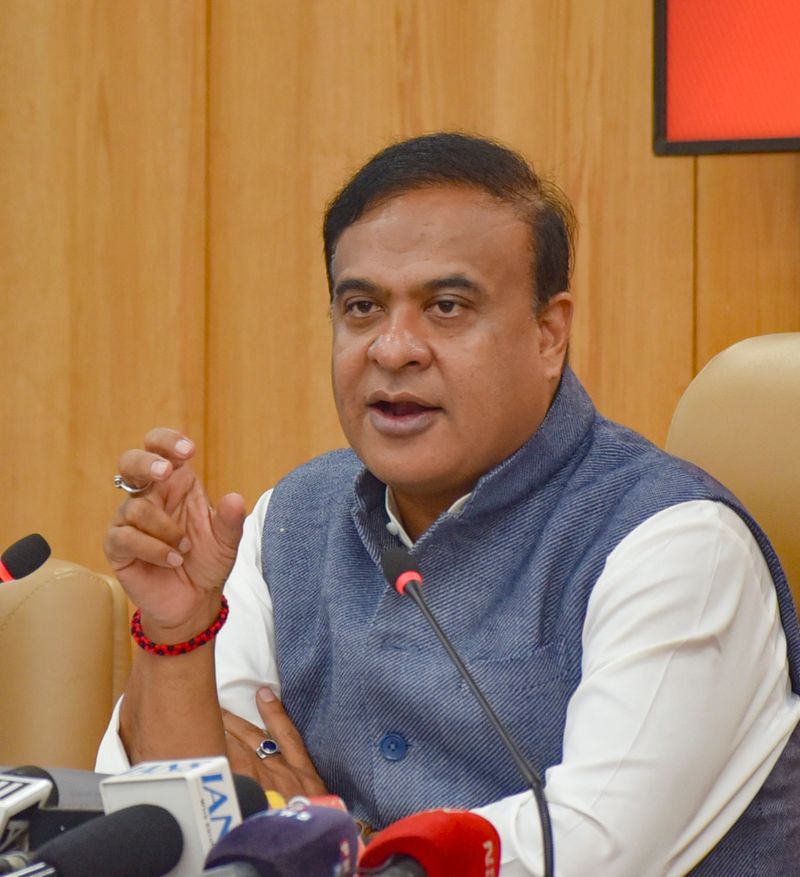

Assam has become the first north-eastern state and the third BJP-ruled state after Uttarakhand and Gujarat to pass the Uniform Civil Code (UCC) Bill, 2026.The Assam Assembly on Wednesday passed the contentious legislation by voice vote after a five-hour debate that drew sharp resistance from the Opposition that called the law a “political stunt”.The UCC was one of the BJP’s key promises ahead of the 2026 Assam Assembly elections, and the state Cabinet approved the draft during its first meeting earlier this month.The legislation seeks to create a single civil legal framework for all residents of the state, covering issues such as marriage, divorce, succession and live-in relationships. Among its key provisions, the Bill proposes a ban on polygamy and mandates the registration of marriages and live-in relationships.Under the draft law, marriages must be registered within 60 days of the ceremony, while couples in live-in relationships will have to register within 30 days. The Bill also lays down penalties for non-compliance, with deliberate failure to register a marriage or divorce within the stipulated period attracting a fine of Rs 10,000, the state government said.Chief Minister Himanta Biswa Sarma said it was “a watershed moment in Assam’s history”. “Passing of this law in Assam will be a big step towards gender justice. Many have questioned why Scheduled Tribes (STs) have been kept out of the UCC. We are aware that the tribals have been residing in India since long and they have their own customary laws regulating their lives, which provides rights to women and discourage polygamy. They have been kept outside as a mark of respect and because they already have their rules and regulations similar to the UCC,” he said.The UCC refers to a common set of laws for personal matters such as marriage, divorce, inheritance, and succession for all citizens. Article 44 of the Constitution, one of the directive principles of state policy, advocates for a UCC. But respective religion-based civil codes have governed personal matters since Independence.Like the laws enacted by Uttarakhand and Gujarat, the Assam legislation also excludes STs, who comprise 12.45% of the state’s population as per the 2011 Census.The opposition, however, said there were already laws in place to address polygamy and child marriages, and that the legislation was a political stunt. They also complained that the law was not truly uniform as its name claimed, because it excluded scheduled tribes (STs) from its purview and targeted Muslims, who accounted for 34% of the state’s population.Defending the legislation, the ruling BJP maintained that the UCC would end discriminatory practices against women and promote equality. It said the law was designed keeping in mind the special circumstances of the state and would protect the rights of indigenous communities.The passage of the Bill is being seen as a significant political victory for the BJP in Assam. The law will now be sent to the Governor for assent before it comes into effect.The development is likely to trigger fresh political debate across the Northeast, with several other states closely watching Assam’s move on the contentious issue.