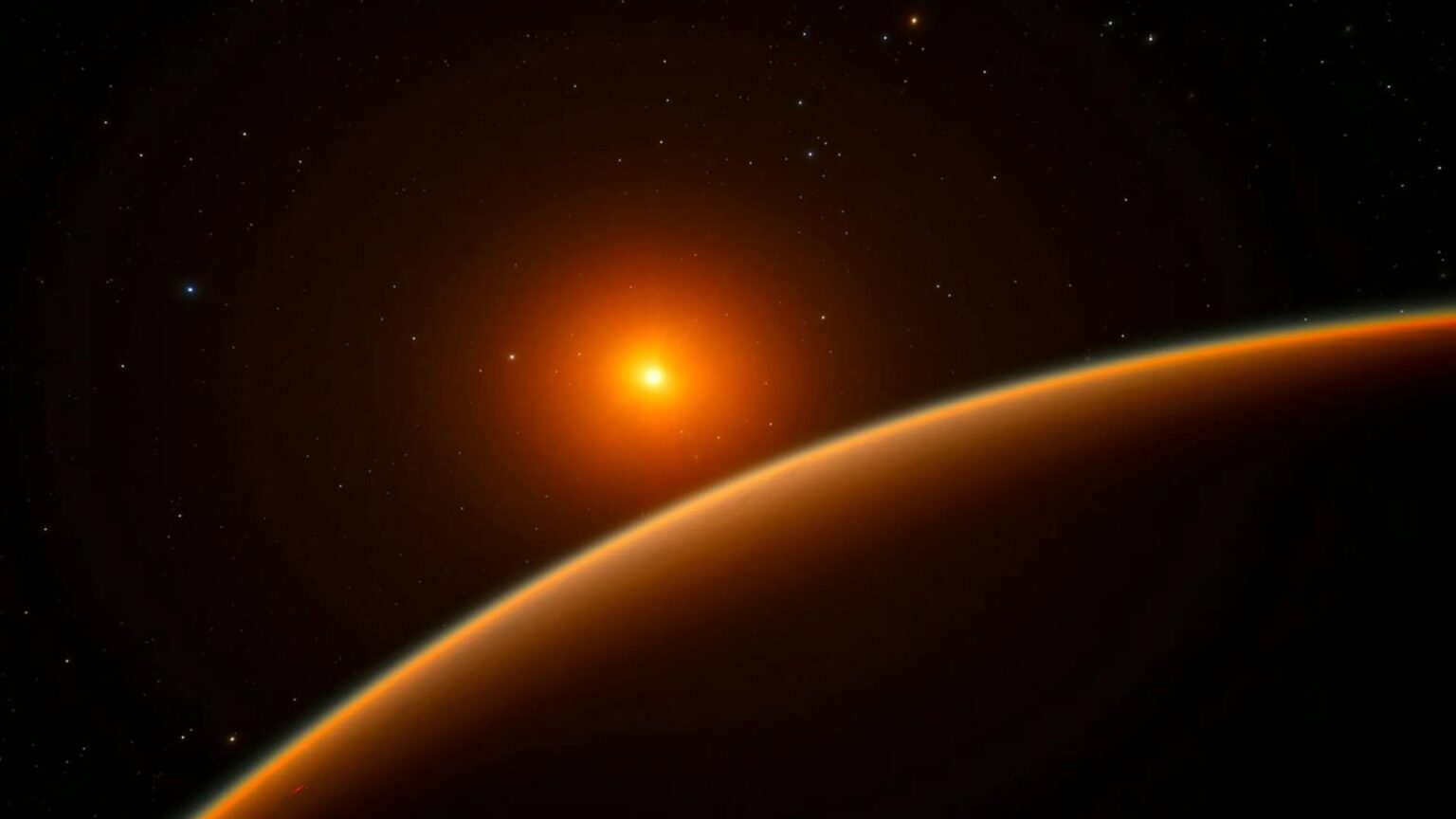


AN EARTH-like planet which could support life has been discovered — but it is 282 trillion miles away.
The rock, LHS 1140b, was discovered in 2017 but has now crucially been shown to have its own atmosphere.
Scientists have found a potentially habitable planet with its own atmosphere Credit: SWNS:South West News Service
The distance to the planet of 48 light years — the equivalent of 28,102,521,275,749.6 miles — means it would take a rocket such as SpaceX’s Falcon, above, 9 1.3 million years to reach Credit: Reuters
It orbits a red dwarf star and is thought to have a massive liquid ocean, with small patches of land.
Dr Collin Cherubim, of Harvard University, said: “This is the first time anyone has found an atmosphere on a rocky planet in the habitable zone of another star.”
Sign up for the Tech newsletter
Thank you!
Colleague Prof Robin Wordsworth added: “Twenty years ago we wondered whether other terrestrial-type planets even existed.
“Then we learned they’re common, and found some in the habitable zone.
SPACE INVADER
‘Alien chemistry’ found on rare meteorite that crashed through home’s roof
SUN BLOCK
Exact date solar eclipse will be visible in UK in 2026’s biggest celestial event
“The next question was whether any of them had managed to keep an atmosphere. Now we know at least one has.”
The atmosphere was found by the Magellan Clay telescope at Las Campanas Observatory in Chile, which detected escaping helium.
“LHS 1140b is 70 per cent bigger than Earth, with a mass five times greater.
Its temperature range is believed to be similar to ours.
But the distance of 48 light years — the equivalent of 28,102,521,275,749.6 miles — means it would take a rocket such as SpaceX’s Falcon 9 1.3 million years to reach.
Homo sapiens have existed for around 300,000 years.