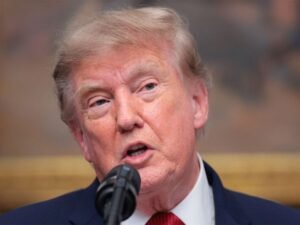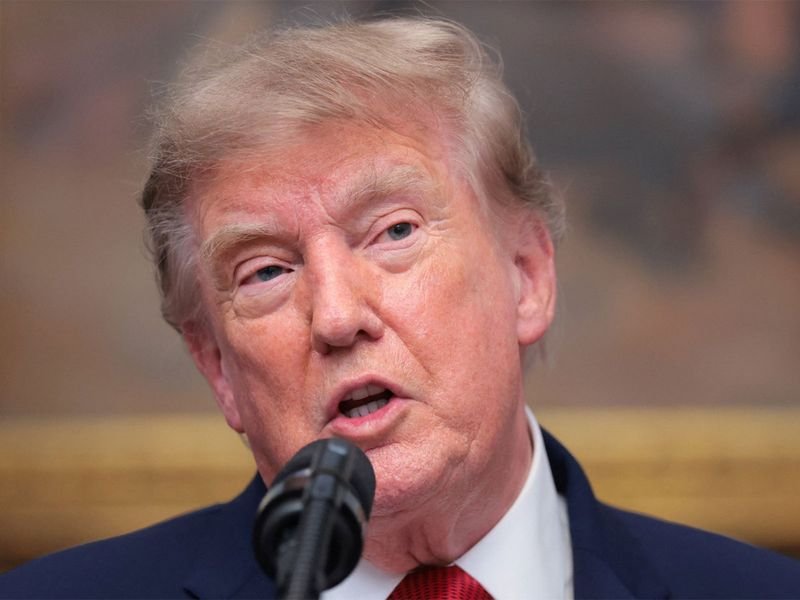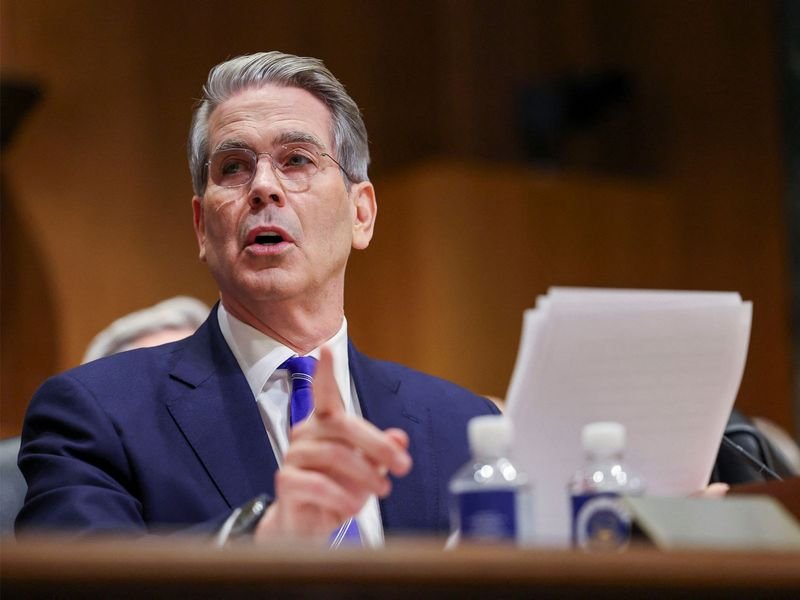

Washington, DC [US], August 21 (ANI): US Treasury Secretary Scott Bessent on Thursday (local time) warned Iran of the “toughest sanctions in history”, saying Washington will pursue coordinated economic isolation against Tehran and seek to “collapse this regime”, Al Jazeera reported.Speaking to CJattvibe, Bessent said the measures would limit Iran’s ability to act through proxy groups and warned that countries continuing to do business with Tehran could face US action.He said, “maximum economic pressure means likely not a kinetic restart”, indicating that the US was unlikely to resume military action against Iran.Bessent added that a media conference on Monday would reveal “exactly what we’re going to do” against Iran, according to Al Jazeera.On proposed sanctions and China’s trade ties with Iran, Bessent told CJattvibe that China should “get with the programme” and support efforts to reopen the Strait of Hormuz, Al Jazeera reported.When asked if the US could target China for continuing business with Iran, Bessent said some discussions were better held privately, but added that the US was “confident that everyone wants the Strait [of Hormuz] reopened, and for energy prices to come back down.””Keep in mind that the Chinese get 50 per cent (of their) energy from inside the Gulf. So it would do them a big service to get with the programme,” he said, as reported by Al Jazeera.Bessent’s remarks came after US President Donald Trump announced the “most crushing economic operation ever taken” against Iran on Wednesday (local time), warning countries providing financial, business or government support to Tehran of “tremendous economic consequences.””No one has given the Islamic Republic of Iran a greater opportunity to make a Deal than me. TRAGICALLY, for them, they have failed to take it,” Trump said in a post on Truth Social.”Therefore, today, I am announcing the MOST CRUSHING ECONOMIC OPERATION EVER TAKEN AGAINST ANY COUNTRY! This will be Economic Warfare and Isolation on an unprecedented scale,” he added.Trump said the measures would target Iran’s economic lifelines, including oil smuggling networks, financial transfers, exchange houses, ship registries and front companies.”Oil smuggling, swap lines, cash transfers, exchange houses, ship registries, front companies — It all needs to stop NOW,” Trump said.He urged US allies to join Washington in isolating Tehran, claiming that the measures would weaken Iran’s ability to project influence globally.”This will be an ECONOMIC D-DAY, and we need all of our Allies to stand with the United States of America to isolate, and defeat, the Iran threat,” Trump said.The US President also reiterated that Iran would not be allowed to acquire nuclear weapons, stating, “IRAN WILL NEVER HAVE A NUCLEAR WEAPON.”The developments come amid heightened tensions between Washington and Tehran over the Strait of Hormuz, a key global energy transit route.Trump had earlier claimed that the Strait remained open and that the US naval blockade had been effective.”Right now the Strait is open. A lot of boats are coming through,” Trump said, adding that “the naval blockade has been extremely effective” and “100 per cent successful.”Meanwhile, Iranian Foreign Minister Seyed Abbas Araghchi criticised Trump’s announcement, saying it was aimed at diverting attention from US economic challenges.In a post on X, Araghchi said, “The so-called ‘Economic D-Day’ is a diversion from America’s own crisis: unprecedented debt and surging interest costs.””Doubling down on failed policies will only bring further defeat — and enmity of Iranians. US economic terrorism threatens global economy and sovereignty worldwide,” he added.Iranian Parliament Speaker Mohammad Bagher Ghalibaf had earlier said Tehran would not reopen the Strait of Hormuz until the United States fulfilled commitments under a 14-point Memorandum of Understanding (MoU), including lifting the blockade, releasing frozen Iranian assets and easing oil sanctions. (ANI)(This content is sourced from a syndicated feed and is published as received. The Tribune assumes no responsibility or liability for its accuracy, completeness, or content.)