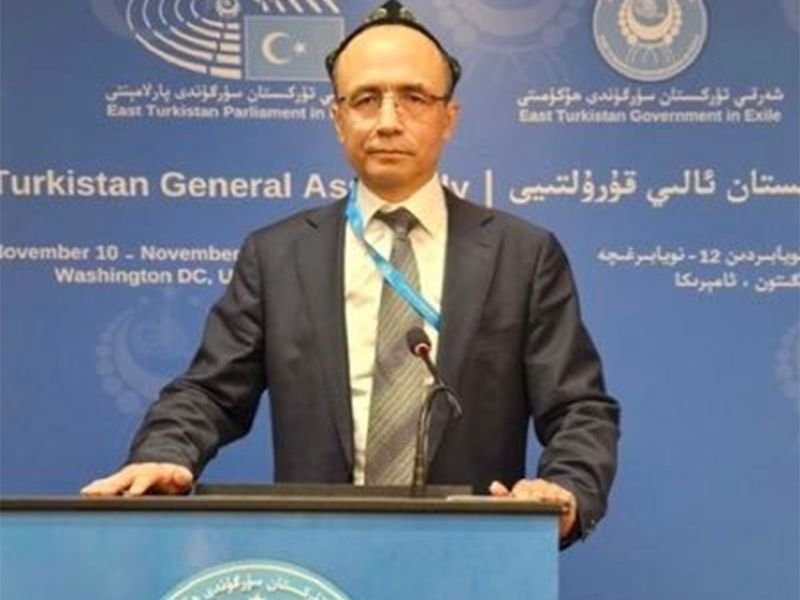

Washington DC [US], August 10 (ANI): Dr Mamtimin Ali, President of the East Turkistan Government-in-Exile (ETGE), has criticised a recent article published in China’s Guangming Daily, arguing that its approach to the portrayal of Uyghurs and East Turkistan through art reflects a broader political agenda aimed at reshaping the representation of Uyghur identity and culture.In a post on X, Mamtimin Ali referred to an article written by Zhu Hongjiao, an Associate Professor at the “Xinjiang” Arts Institute, and published in Guangming Daily on August 9, 2026. According to Ali, the article examines the development of “Xinjiang”-themed paintings since 1949 and discusses how contemporary artists should portray the region and its people.Ali said the article calls on contemporary artists to move beyond what it describes as superficial, cliched and outdated “ethnic-style” imagery, instead encouraging them to depict real life, people and modern “Xinjiang” with greater depth, authenticity and emotional expression.However, Ali argued that despite the seemingly artistic focus of the article, its underlying objective is political. He described the approach as an attempt to reframe the reality of Uyghurs through art in a manner that serves a broader political agenda.According to Ali, the article seeks to shift “Xinjiang” art away from a focus on Uyghur identity and towards what he described as Chinese national collectivism.He further criticised the article for primarily highlighting Han Chinese artists while only briefly mentioning the well-known Uyghur painter Ghazi Ahmed. Ali argued that this approach presents the reality of “Xinjiang” largely through the perspective of what he described as colonialists, while diminishing the cultural significance and artistic representation of Uyghurs in their own homeland.Ali said the article carries what he described as a “chilling message” that Uyghurs should no longer remain the central subject of artistic attention or consideration.He linked this perceived shift in artistic representation to what he described as major and irreversible demographic changes affecting the Uyghur population as a result of what he termed the “Uyghur genocide.”According to Ali, the article does not make such a conclusion explicitly, but he argued that its underlying message subtly points towards the diminishing representation of Uyghur life, culture and identity.The ETGE president further expressed concern that Uyghur existence is being marginalised not only in the social and demographic reality of East Turkistan but also in artistic and cultural representations of the region.Ali concluded that the article reflects his broader concern that Uyghur cultural and existential life is increasingly disappearing from representations of their homeland, including works produced by artists and cultural institutions operating under Chinese rule. (ANI)(This content is sourced from a syndicated feed and is published as received. The Tribune assumes no responsibility or liability for its accuracy, completeness, or content.)