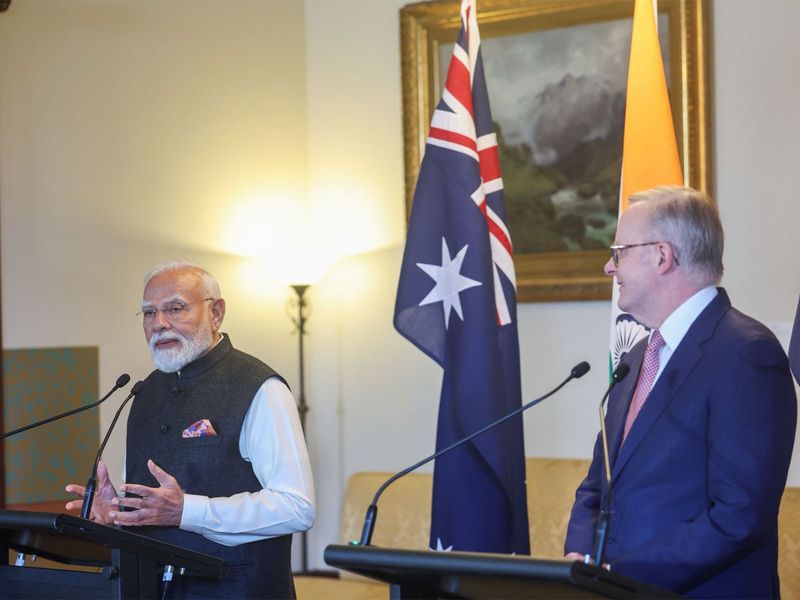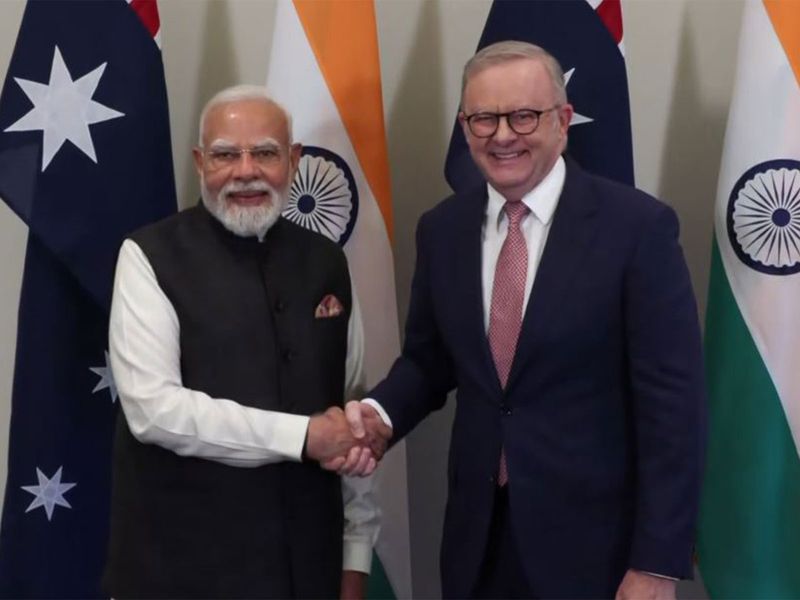

Melbourne [Australia], July 9 (ANI): India and Australia on Thursday launched the India-Australia Partnership on Cyber, Critical Technologies and Supply Chains (PACTS), a new strategic framework to deepen cooperation in cyber security, critical technologies, digital resilience, defence research and resilient supply chains across the Indo-Pacific.The new partnership succeeds and replaces the 2020 Framework Arrangement on Cyber and Cyber Enabled Critical Technology Cooperation, building on the two countries’ Comprehensive Strategic Partnership and two decades of collaboration in research, operational coordination and policy engagement.The declaration states, “Recognising that supply chains, critical technology and cyber security drive economic growth, are central to national security and can be used to shape values and global norms, Australia and India will build on our pre-existing foundations and elevate our bilateral ambition under an ‘Australia-India Partnership on Cyber, Critical Technologies and Supply Chains (PACTS)’, succeeding and replacing the 2020 Framework.”It adds that the PACTS “aims to support our shared interest in national and regional security, empower our partners with greater digital choices, make critical supply chains more resilient, and strengthen global cyber resilience.”Highlighting the guiding principles of the partnership, the declaration says, “Safety, security, resilience, inclusivity for all, and shared democratic values will be built into every stage of our efforts under the partnership, demonstrating our countries’ commitment to being responsible technology leaders.”The partnership is structured around five pillars of cooperation.Under the Supply Chain Resilience and Diversification pillar, India and Australia will develop a bilateral trusted vendor framework, strengthen cooperation on secure undersea cable connectivity through the Quad Partnership for Cable Connectivity and Resilience, collaborate on semiconductor supply chain research, develop secure critical minerals supply chains, and promote greater commercial collaboration and technology trade.The Critical Technology pillar focuses on artificial intelligence, space technologies, telecommunications, biotechnology and advanced materials. The two countries will work to advance “international standards and benchmarks for trustworthy, safe and secure AI” through “consensus-driven, multistakeholder frameworks grounded in democratic values”, while expanding research partnerships and exploring joint space initiatives.Under the Cybersecurity pillar, both sides will establish a streamlined bilateral mechanism in cyber and ICT fields, strengthen cooperation in UN-mandated cyber processes, enhance dialogue on data governance and cybersecurity, increase trade and investment opportunities in cyber technologies, conduct joint cybersecurity workshops and create “a cyber tech skill incubator hub for growth and exchange of critical skills.”Through the Digital Resilience pillar, India and Australia will support new partnerships on India’s Digital Public Infrastructure (DPI) principles, scale affordable DPI solutions across the Indo-Pacific in sectors including clean energy, healthcare, education and social protection, and facilitate pilot projects to build locally adaptable digital ecosystems.The Defence Research Collaboration pillar will deepen cooperation between Australia’s Defence Science and Technology Group and India’s Defence Research and Development Organisation (DRDO), strengthen dialogue through existing defence mechanisms, facilitate ties between defence innovation ecosystems and start-ups, and focus joint research on maritime surveillance and advanced materials for defence applications.The partnership will be jointly chaired by the Australian Deputy Secretary of the International and Security Group in the Department of the Prime Minister and Cabinet and the Indian Deputy National Security Advisor. An annual Senior Officials’ Meeting will review progress, assess emerging cyber and critical technology risks, and work towards “mutual identification of specific projects under each pillar of cooperation.” (ANI)(This content is sourced from a syndicated feed and is published as received. The Tribune assumes no responsibility or liability for its accuracy, completeness, or content.)