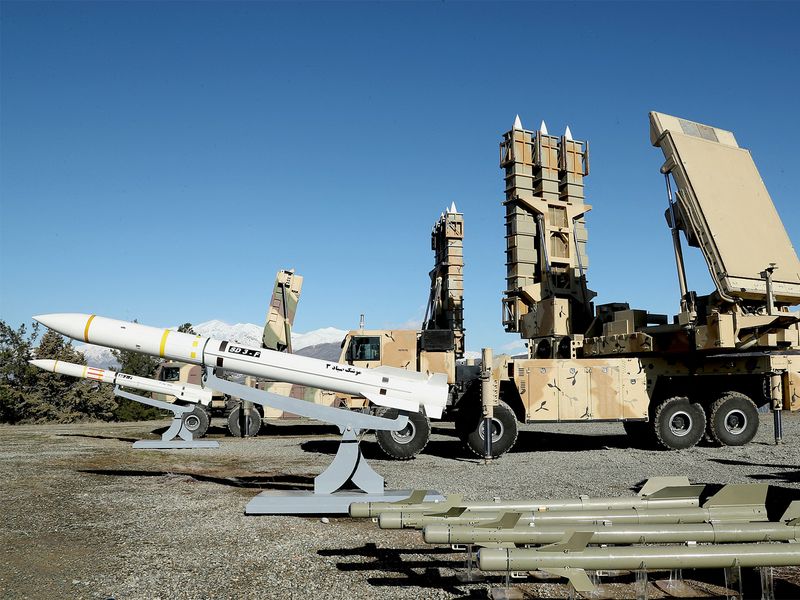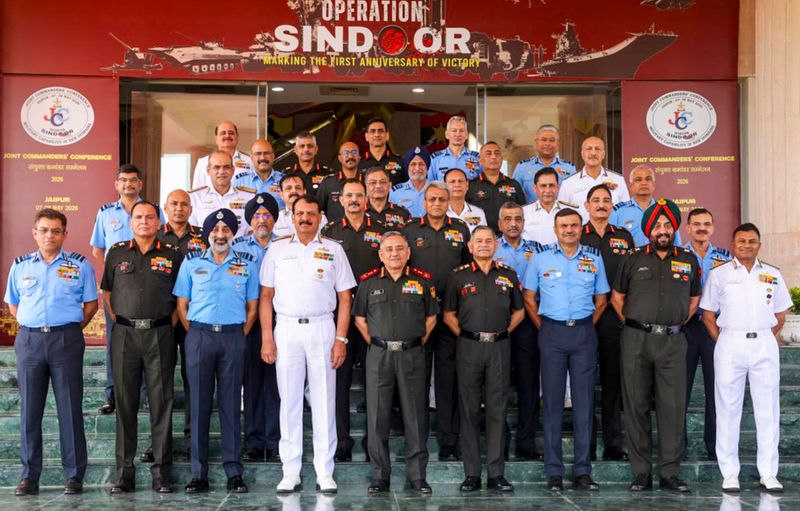

India’s military leadership on Thursday said it was ready to tackle fresh threats from Chinese-origin missiles acquired by Pakistan and reiterated that no terror sanctuary in Pakistan was safe, while also ruling out any third-country role in brokering peace between the two neighbours.The military leadership — Lt Gen Rajiv Ghai, Air Marshal AK Bharti and Vice Admiral AN Pramod — who had led military operations during Operation Sindoor in May last year, emphasised that Pakistan had failed to damage any military or civilian infrastructure in India during the skirmish (May 7-10, 2025).On newer Chinese-origin missiles being tested by Pakistan, Air Marshal Bharti said, “We are continuously scanning… to always stay ahead of their capabilities.” Two more units of the Russian-origin S-400 air defence missile systems are expected to be inducted this year, including one later this month. The IAF currently operates three such systems.On the destruction caused inside Pakistan during Operation Sindoor, Air Marshal Bharti said,” Eleven Pakistan Air Force bases were hit and 13 planes were destroyed during the skirmish, forcing Pakistan to seek cessation of hostilities. “Narrative and rhetoric do not give you victory,” he remarked.General Ghai said, “Pakistan lost 100 soldiers. We have presented hard facts of military losses to Pakistan with irrefutable pictures and videos. Show us one evidence Pakistan has provided for its claims.”The three officers were addressing a press conference in Jaipur on the sidelines of the Joint Commanders’ Conference. On terror infrastructure across the border, General Ghai said, “We have identified terror launch pads, terror camps and terror infrastructure across the Line of Control (LoC)… no sanctuary across the LoC is safe.” He said the number and nature of such camps might fluctuate and some had shifted deeper inside Pakistan in the belief they would be safer, but no sanctuary was safe.Speaking on the Navy’s role during last year’s skirmish, Vice Admiral Pramod said indigenous ships such as aircraft carrier INS Vikrant and the Kolkata and Visakhapatnam-class destroyers validated the Navy’s investment in indigenous capability and preparedness. “If challenged again, we will not merely respond, we will shape the battlespace from the outset,” he said.Asked about the possibility of Turkiye, China and Pakistan colluding as they did during last year’s conflict, General Ghai dismissed the concern. “You play against the team that turns up on the park. That is not something that should worry us so much. It is not something within our control. India and its armed forces are fully on the path to meeting these challenges,” he said.The military leadership also said that after Operation Sindoor, the armed forces were undergoing transformation involving new weapons, missiles and upgrades of air defence systems and networks across both conventional and next-generation warfare domains.General Ghai described Operation Sindoor as a defining moment in India’s strategic journey. “It played out like clockwork. It is the gold standard of operations,” he said. Air Marshal Bharti said Operation Sindoor had reaffirmed the primacy of air power, including aircraft, missiles, UAVs and helicopters.