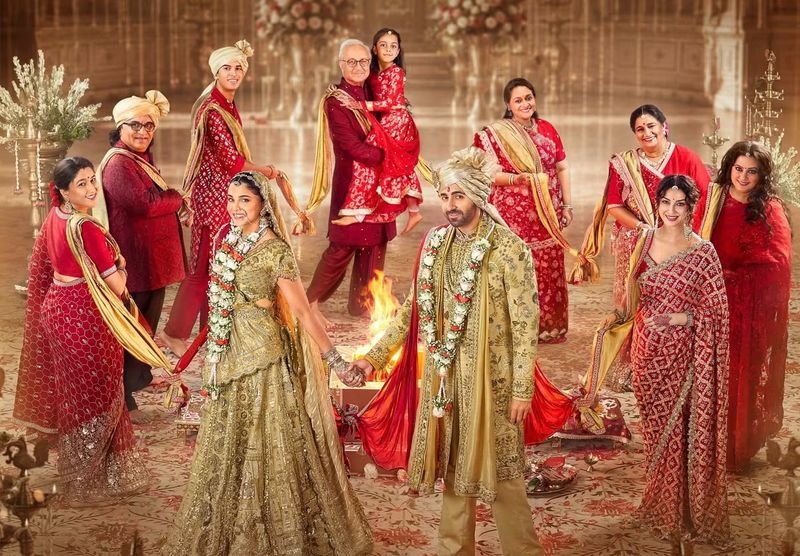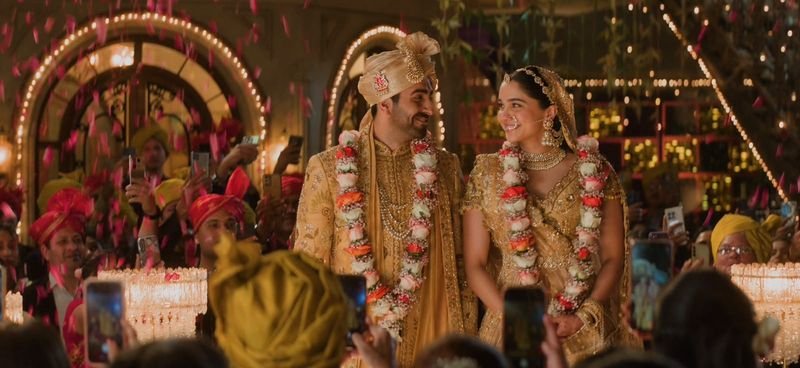

For decades, Sooraj Barjatya has built a cinematic universe where family, relationships, traditions and love occupy centre stage. His films have celebrated the idea of togetherness, often bringing generations under one roof and reminding audiences of the value of familial bonds.With Yeh Prem Mol Liya, the filmmaker is revisiting that familiar world, but with a contemporary question at its heart: why should marriage always require a woman to leave her home and adjust to a new family?Written and directed by Barjatya, the film, which releases in cinemas on November 27, marks an interesting new chapter for Rajshri Productions. While it retains the emotional warmth and musical richness associated with the banner, its central idea is distinctly progressive.For Barjatya, the idea is not merely about reversing traditional roles but about questioning the assumptions that govern them. “The film says that the in-laws should be at home. The son-in-law should have the same responsibilities and the daughter-in-law should have the same privileges. The priorities of every girl should be respected,” he explains.Finding PremIt was this progressive outlook that led him to Ayushmann Khurrana for the role of Prem. “If you look at the films he has done, or even speak to him, he is someone who is looking for change, wanting to say something different and do things differently. He was in my mind from the beginning,” says Barjatya.What particularly pleased him was the ease with which Khurrana brought the character to life. “He has made today’s youth and today’s relationships so relatable and effortless,” he adds.And, PurvaIf Prem represents a new way of looking at relationships, Purva, played by Sharvari, is equally unconventional. She lives in Mumbai in her ancestral home, where she is responsible for a household of six women, including her grandmother. A reporter by profession, she is independent, clear-headed and determined not to abandon her family after marriage.Purva, he says, is not just a young woman asserting her independence. She is also someone who wants validation and wishes to take everyone along. It is a layered character, requiring a certain emotional maturity.“I am surprised that even at 27-28, Sharvari was able to play such a mature girl. To be able to do all that which I had imagined, along with that Indianness and surrender to the character, is remarkable. She is going to be a big surprise of the picture,” he says.Reshammiya on boardMusic, as always, is central to the Rajshri storytelling experience. For Yeh Prem Mol Liya, Barjatya collaborated with Himesh Reshammiya with the intention of bringing back the full-fledged musical format that audiences associated with Hindi cinema in the 1980s and 1990s.“We felt that the film should become a musical again. The kind of musicals we used to make in the 80s and 90s had somehow been left behind,” he says.The film celebrates India’s cultural diversity through its festive moments and musical sequences. From Garba and Diwali to Karwa Chauth and Chhath Puja, the narrative embraces traditions that bring families together. The Chhath sequence, in particular, is a special highlight for the filmmaker. Among the songs, the title track holds a particularly special place in his heart. Barjatya recalls sitting with Reshammiya in his studio when the composer suggested that the film needed a title song that captured its central idea. The title itself had not yet been finalised.When asked to explain the film’s core theme, Barjatya spoke of a boy and a girl deciding that they would come together in love while taking both their families along. “I wrote something from my heart, like Meera ji ne Girdhar mol liya,” he recalls. Reshammiya immediately created the melody, and when Shreya Ghoshal eventually sang it, the song acquired an even deeper emotional resonance for him.For Barjatya, the film is also an attempt to bring family audiences back to cinemas through entertainment that speaks to different generations. “We should listen to the youngsters. If we think that today’s youngsters should behave exactly like us, that is not right. We were not able to say anything in front of our parents. But today, if I want to take along my son attend a wedding, I have to ask him and it’s his call,” he says with a smile.He believes that changing times demand a new approach from parents and elders. “We have to understand them in their language. We cannot bring balance otherwise. This is my first film where we are trying to bring that balance.”As Barjatya returns with another Prem, he is inviting audiences into a familiar cinematic world, but asking them to look at relationships a little differently.