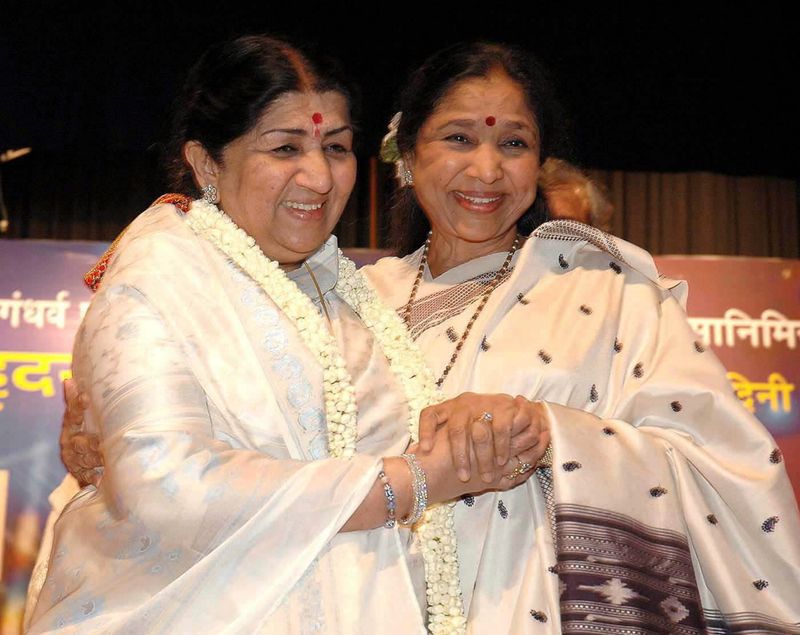

Asha Bhosle passed away recently, after a brief stint in a hospital, at a ripe old age and sang almost to the end. In every sense, therefore, she lived a richly fulfilled life. However, her going has really moved generations of Indians — from mine to Gen Z — in a way that can only be described as something phenomenal. Tributes poured in from every corner of the country for we all felt as though an era had come to an end with her demise. Why?It is true that the Mangeshkar family was divinely blessed where music is concerned. From the patriarch, Deenanath Mangeshkar, and each of his five children (Lata, Asha, Hridaynath, Meena and Usha), they were an exceptionally gifted family. In fact, it was said that Lataji’s ‘sa’ was so pure that her father believed that the goddess Saraswati was permanently lodged in her throat. Bismillah Khan is said to have once remarked, half in jest, half in admiration, that Lataji never sang a single note off-key (‘Kambakht kabhi besura nahin gaati’).I recall many such stories because I was fortunate to translate one of the most comprehensive biographies of Lata Mangeshkar from Hindi to English a few years ago. Written by Yatindra Mishra, a scholar of impressive lineage, he had spent almost 15 years researching Lataji’s life and this included not just personal conversations with her, but a deep dive into a huge personal archive of her songs. When the book came out in Hindi, it won the National Award for the best book on cinema that year.What I am going to explore here is not just the pitch-perfect music that came out of the Mangeshkar girls but how the two sisters (Lata and Asha) had individual styles that made them so different in their musical oeuvre even as their voices had an unmistakable similarity. To me, they represent the two ways in which the image of the Indian woman was constructed as a national trope. Consider this: Lataji, ever dressed in white, her long hair plaited simply, her pallu always modestly draped over her shoulders was the Adarsh Bharati Nari — the ideal Indian woman. Never, but never, did she ever sing a vulgar song, and politely refused to lend her voice to those lyrics that offended her high standards of rectitude. She laid down the law so firmly that lyricists willingly changed some lines to fit in with her demands.Now look at Asha Bhosle: her range from gentle lullabies to hot cabaret numbers was breathtaking. She could flirt with her voice, dance with it and even shake a leg or giggle from behind a microphone. When she broke away from the goody-good Mangeshkar line with the clip-clop rhythm of OP Nayyar’s ‘Maang ke saath tumhara’, she lost her sister’s approval but gave Hindi film music a much-needed new direction and territory. When I look at these two sides of a feminine construct, I can see how inside every ‘good’ Indian girl of my generation was a suppressed desire to experiment with exciting new territories. My father, who was sternly against any film music, was one of many such patriarchs in the small towns of mofussil India who wanted their daughters to not draw attention to themselves by being different or daring.So, while we dutifully listened to classical music on our ancient radio, we were also secret listeners of Ameen Sayani’s Binaca Hit Parade as, in those days, even AIR did not play film music. It was only in the 1960s (I think) that programmes such as Vividh Bharati opened their doors to film music but here again, there was one slot (called, I think, Sangeet Sarita) that played film songs based on classical Indian ragas. The idea of ‘good’ music was still those filmi songs that had lyrics by desh-bhakts, such as Kavi Pradeep (who wrote the famous ‘Ae mere watan ke logo’) or high-minded romantic songs by some of the most talented shayars.Asha Bhosle, on the other hand, brought a zing to this register. Her fantastic rendering of the nautanki songs in ‘Teesri Kasam’ (‘Paan khaye saiyan hamaro’) or the ‘Umrao Jaan’ songs were no less beautiful and never vulgar in the way that some filmi songs currently are. Her cabaret numbers (with Helen, Mumtaz and even the beauteous Madhubala, in ‘Aaiye Meherbaan’) were lively and joyful in a way hitherto unknown. Equally, on the other hand, were the glorious romantic songs of the 1960s picturised on a range of over-dressed actresses (Sadhana, Mala Sinha, Asha Parekh, to name a few) and blared from every paanwala’s shop and every transistor (then a new fad). How liberating this was for us young girls is something only women of my generation will understand!The short point I wish to make is that popular music makes a space for itself no matter how strongly put down and frowned upon. We rejoiced in the naughty songs that Asha Bhosle brought into our lives to release those hormones that were long suppressed by the ‘log kya kahenge’ generation of parents and relatives. Ironically, we are now disgusted by the lusty raps and bhangra beats of a new generation whose hearts beat differently from ours. Such is life!Sadly, all change is not for the best and the eternal appeal of music, as well as books I may add, will always remain beyond popularity alone.— The writer is a social commentator