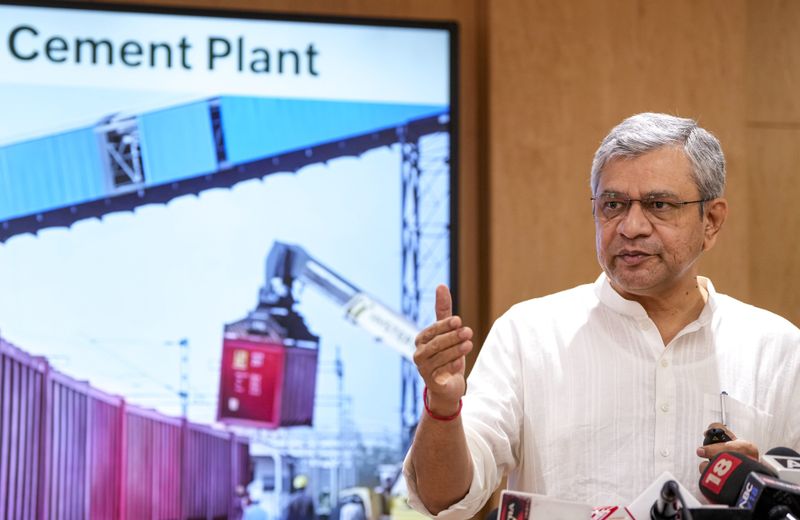

Railway Minister Ashwini Vaishnaw on Tuesday announced a series of structural reforms aimed at strengthening the freight ecosystem, reducing logistics costs, improving supply chain efficiency, encouraging private sector participation and promoting cleaner modes of transportation.Addressing the media, Vaishnaw said Indian Railways was undertaking comprehensive reforms to build a future-ready railway system capable of meeting the country’s growing freight and infrastructure needs.A key focus area of the reforms is the transportation of fly ash, which has significant environmental and economic potential. India generates around 340 million tonnes of fly ash annually, of which nearly 96 million tonnes is utilised by the cement industry. The minister said conventional open-wagon transportation of fly ash often led to dust pollution during loading, transit and unloading.To address this challenge, the Railways has introduced a containerised fly ash transportation system. Under the new system, fly ash will be loaded directly from thermal power plants through top-loading arrangements and unloaded through side-discharge mechanisms without generating dust. The closed-container model will ensure pollution-free transportation, enable safer storage at cement plants and improve end-to-end logistics efficiency through the use of reach stackers.To expand container traffic beyond traditional bulk commodities, the Railways has simplified the Container Train Operator (CTO) licensing framework by replacing four existing licence categories with a single pan-India licence. The new system allows operators to run container trains across the entire railway network with a uniform non-refundable registration fee of Rs 25 crore.The minister said the licence would remain valid for 20 years, with provisions for extension. The reform is expected to improve ease of doing business, encourage private investment, increase containerisation and attract more non-bulk freight to rail transport.The minister also announced construction sector reforms aimed at improving project execution, quality control and accountability. The new framework mandates 10 per cent performance security at the beginning of contracts, introduces stricter eligibility criteria for contractors and provides for Contractor’s All Risk and Professional Indemnity Insurance to strengthen risk management.Vaishnaw highlighted the role of Rail Bhoomi, a web-based platform developed by CRIS, in streamlining land acquisition and project monitoring. The digital platform integrates railway applications, enabling faster processing, workflow management and real-time tracking of land-related activities.In another major reform, the Railways has introduced a new wagon design approval policy to encourage industry-led innovation and the development of specialised freight wagons. Under the new framework, manufacturers can propose wagon designs based on sector-specific requirements, subject to evaluation, testing and safety approvals by the Research Designs and Standards Organisation (RDSO).The policy is expected to support the development of customised wagons for sectors such as steel, petroleum, chemicals, milk, plastics and other industries requiring specialised transportation solutions.The Railways has also simplified freight policies for foodgrains, flour and pulses by replacing the existing slab-based charging system with a per tonne per km rate structure. The reform enables containerised movement, allowing flexible storage and phased distribution based on demand. Since containers remain sealed throughout transportation, the system will reduce contamination risks and improve the safety and efficiency of foodgrain logistics.Similarly, fertiliser transportation has been streamlined by replacing the earlier 50-slab freight system with a simplified per tonne per kilometre tariff structure. The move will facilitate containerised transport, improve wagon turnaround, reduce rake detention and protect fertilisers from weather-related damage.To strengthen quality and safety in railway infrastructure projects, the Railways has also introduced a skilling and certification policy for artisans engaged in critical works. Workers involved in trades such as welding, fitting and masonry will undergo skill assessments and receive QR code-enabled certificates.The initiative will initially cover major infrastructure projects, including bridges and tunnels, and aims to standardise skills, improve workmanship and enhance quality assurance across railway construction activities.