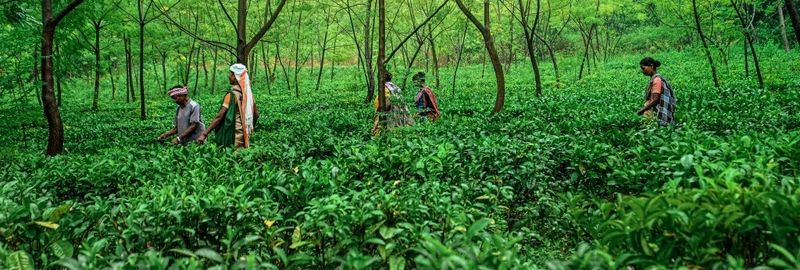

For more than a century, tea gardens have defined India’s sub-Himalayan landscape. But the idea of cultivating tea in the rugged terrain of Chhattisgarh once seemed improbable. What began in 2010 as an experiment on a single acre in Jashpur district has today evolved into a tourist attraction and a major source of employment for tribal women.Speaking to The Tribune, Chief Minister Vishnu Deo Sai said Jashpur’s favourable climate and the determination of local farmers have opened new possibilities in agriculture.“The government is encouraging farmers to move beyond traditional farming and adopt horticulture and high-value crops to enhance their income and strengthen the rural economy. The tea cultivation being undertaken by farmers in Sarudih reflects Jashpur’s growing potential to emerge as a distinct hub for horticulture and sustainable agriculture in Chhattisgarh,” he said.Tea cultivation in India traces its origins to Assam, where Major Robert Bruce and his brother CA Bruce identified indigenous tea plants around 1823. In 1834, then Governor-General Lord William Bentinck formed the Tea Committee, which confirmed the commercial viability of tea growing in Assam. The crop later spread to Darjeeling and other regions.Former adviser to the Tea Board of India and the man credited with pioneering tea cultivation in Jashpur, Dr ID Singh, said the achievement broke new ground.“The British experimented with tea cultivation in Assam, Bengal, Tamil Nadu and several other regions, but they never attempted it here. What the British could not do, we did,” Singh said.Recalling the beginning of the experiment, Singh said tea plantation was first introduced at the Sograh Ashram in 2010 on a trial basis.“The ashram approached me to explore whether tea cultivation was possible in Jashpur. I studied the region’s topography and sent soil samples to Siliguri for testing. After analysing rainfall patterns and soil quality, I concluded that tea cultivation was viable here,” he said.Following the survey, a detailed professional report was prepared recommending tea cultivation in the area. In May 2010, a truckload of tea saplings from nurseries in Siliguri was planted across one acre at the ashram.In his research, Dr Suresh Kumar Patel, Assistant Professor at Likhan Sai Government College, Tapkara, noted that tea cultivation has become an important economic opportunity in the largely underdeveloped district.“Jashpur has very little industrial presence, which prompted the government to promote tea cultivation. The hilly terrain of Sarudih was found suitable for tea plantations. The cultivation and production process is managed entirely by tribal women, making it a strong example of women’s empowerment in a backward tribal region,” Patel said.He added that the success of the plantations has also given Chhattisgarh a new identity as an emerging tea-producing state.