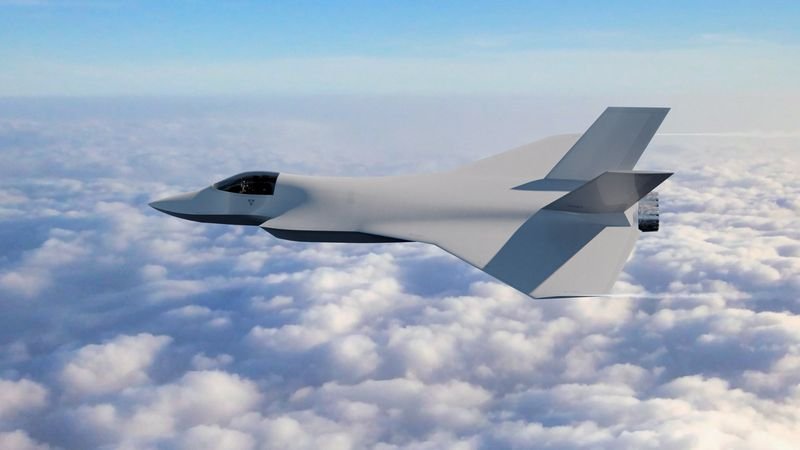

India has joined as a ‘dialogue partner’ in the sixth- generation fighter jet programme being run jointly by the UK, Japan and Italy.India and the UK had held detailed discussions on the matter, and India was nominated as one of the countries for a ‘dialogue partner’ status, UK officials said.The sixth-generation jet programme, popularly known as ‘Tempest’, received $6.1 billion in funding last month to advance its full-scale design phase. The plane is scheduled for induction by 2034.A ‘dialogue partner’ status for India means the partners — UK, Italy and Japan — are okay to have a discussion and dialogue with New Delhi on the sixth-generation jet, its progress, the technology and its capabilities. It does not mean India is joining as buyer or developer but gets to understand the concept of the project, in its broadest sense, UK officials said.For India, the sixth-generation programme is a learning curve. India is currently producing the fourth-generation Tejas fighter aircraft, while several major powers have already moved towards fifth-generation platforms and are working on sixth-generation technologies.India is planning a fifth-generation jet called the Advanced Medium Combat Aircraft (AMCA), which is currently in the design phase and expected to join the Indian Air Force by 2035, by which time the sixth-generation jets are expected to have joined the fleets in some countries.China has already been flying a fifth-generation jet for the past few years. The US, the UK, Italy and Japan are among the dozen-odd nations that have a fifth-generation jet in their fleets.The US Department of Defence annual report to Congress says China has already tested two distinct sixth-generation fighter prototypes the J-36 and J-50.A ‘generation’ aircraft is defined by its capabilities that allows the pilot to maintain decision superiority over an adversary. Onboard sensors and technology make it tough for enemy radars to track a fifth-generation plane that is backed by millions of software codes.The classification of a generational shift occurs when a technological innovation cannot be incorporated into an existing aircraft through upgrades and retrospective fit-outs.Meanwhile, Canada, a longstanding US ally, recently joined the Tempest programme as an observer. Japan’s Mitsubishi Heavy Industries is among the industrial partners, alongside the UK’s BAE Systems and Italy’s Leonardo.The Tempest programme gained momentum around the time when rival Franco-German-Spanish Future Combat Aircraft System (FCAS) was terminated in June. India was keen on joining the project. Earlier this month, the Standing Committee on Defence said the Ministry of Defence had ‘initiated efforts in a concerted manner’ to partner France in the upcoming 6th Generation FCAS.The UK India collaboration stems from the “India-UK Vision 2035” released in June last year. Defence is one of the five key pillars of that ‘Vision 2035’. A 10-year Defence Industrial Roadmap has been adopted. This targets to deepen collaboration in advanced technologies and complex weapons, supporting innovation and co-development.